How often should someone over 60 lift weights? For many beginners, two or three days a week is a practical and effective place to start. But that does not mean everyone over 60 must follow the same schedule, or that training more often is automatically too much.
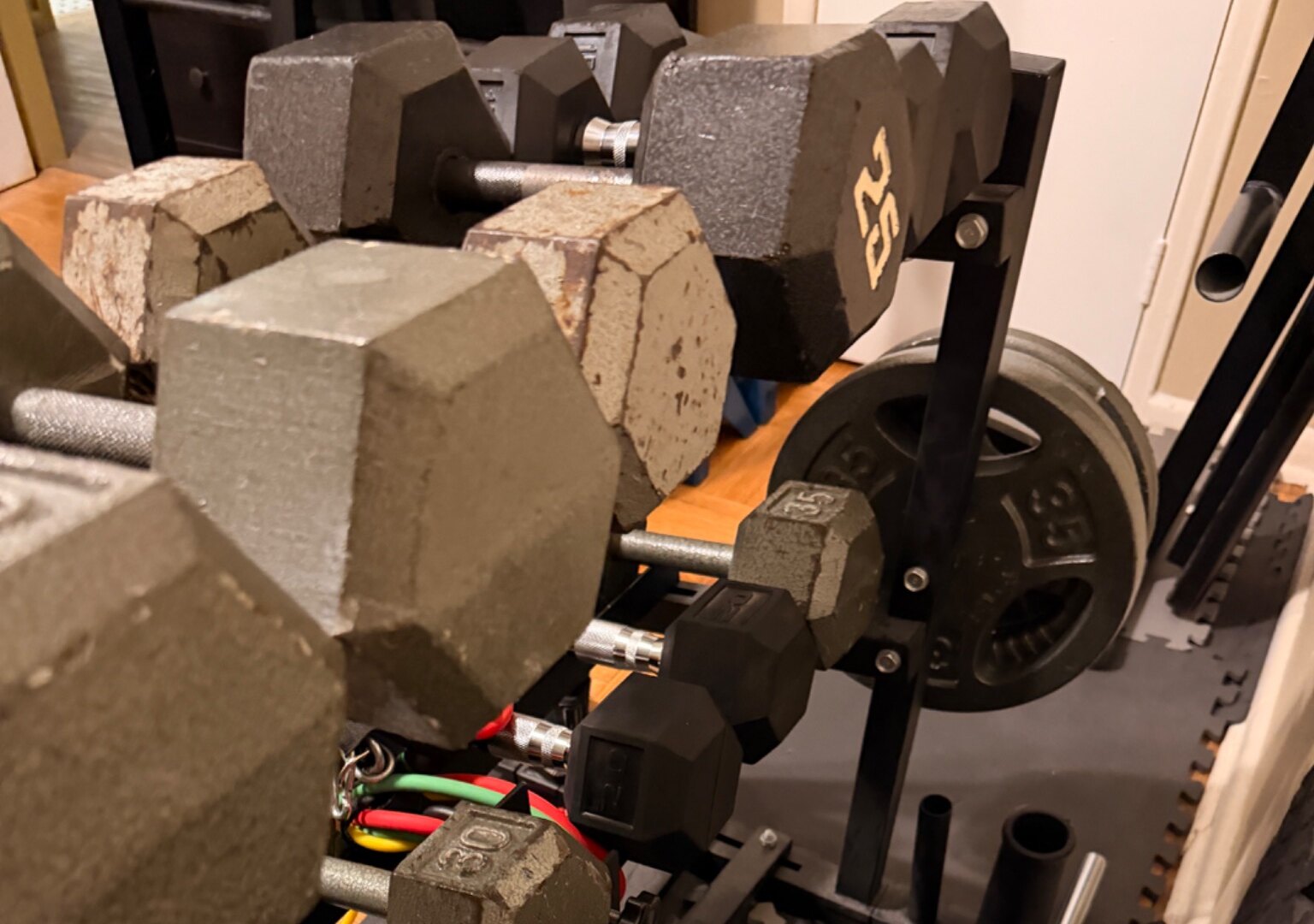
I train five days a week now. I did not begin with the volume, resistance or equipment I use today, but I moved into that schedule fairly quickly. Because I divided my training across different body parts, every day was not a punishing full-body workout. There was usually another muscle group I could train, or a lighter session or stretching I could do.
Two or three days a week can be enough
If you are new to weight training, two or three well-planned sessions can train the whole body and leave recovery days between workouts. That is enough to begin learning the movements, building confidence and giving your muscles a reason to adapt.
A simple full-body routine may include a pushing movement, a pulling movement, a leg exercise, a hip or glute exercise and some core work. You do not need a long list of exercises or a gym full of equipment. You need manageable resistance, controlled repetitions and a reason to return next week.
More days do not always mean more work
Five training days can sound extreme when people imagine five long, exhausting full-body sessions. That is not the only way to train. A split routine divides the body across the week, so one area can recover while another is working.
Someone training two days may do longer full-body workouts. Someone training four or five days may prefer shorter sessions focused on one or two muscle groups. Either approach can work. Weekly workload, effort and recovery tell you more than the number of days on the calendar.
Age is only one recovery factor
Recovery may change as we get older, but your birthday does not decide everything. Training history, sleep, stress, nutrition, health conditions, medications, exercise selection and the amount of work you do all affect how ready you feel for the next session.
Normal muscle soreness or tiredness can be part of training. Sharp pain, joint pain, worsening form or a steady loss of strength are different. Those are signs to stop, reduce the workload or get qualified advice—not signals to push harder just to complete a schedule.
Do you need to wait a full week?
Usually, no. Most people do not need to train a muscle only once every seven days. If a muscle has recovered and you can train it with good form, working it again during the week can be useful. Many routines train each major muscle group about twice a week by using full-body sessions or dividing the week into upper- and lower-body days.
That does not mean you must train every muscle twice. It means frequency is something you can adjust. A stubborn area may benefit from a second, lighter session, while a joint or muscle that still feels irritated may need more time.
How to know if your schedule is working
A good schedule should let you make gradual progress without feeling as though every workout takes something away from the next one. Look for better control, more comfortable repetitions, a little more resistance and greater confidence with the exercises.
If you remain unusually sore, your performance keeps declining, your sleep is disrupted or aches are accumulating, reduce something. That might mean fewer sets, lighter resistance, a shorter workout or an extra rest day. You do not always have to remove an entire training day.
LET YOUR RESULTS ANSWER
Write down your workouts and recovery.
Record the exercises, resistance and repetitions you complete, along with unusual soreness or fatigue. A simple record makes it easier to see whether your schedule is helping you progress.
Use the fitness tracker →My practical recommendation
If you are starting after 60, begin with two or three strength-training days a week. Keep the first workouts manageable and concentrate on learning the movements. After several weeks, decide from your actual recovery and progress whether you want to add another short session.
If you enjoy training more often, split the work across the week instead of repeating hard full-body workouts day after day. A training day can also be light. You can focus on a smaller body part, practice controlled repetitions, work on mobility or simply stop before fatigue damages your form.
Most importantly, do not choose a schedule that looks impressive but makes you quit. I would rather see someone train twice a week for a year than train five days for two weeks and disappear.
Ready to put this into practice?
Explore my free 2-day and 3-day strength-training programs for people starting or returning to exercise after 60.
Explore Beginner Workout ProgramsStart with two or three days if you are a beginner. Add frequency only when your recovery, schedule and interest support it. After 60, consistency still matters more than chasing a perfect number.
This article shares my personal experience and is not medical advice. If you are inactive, have a medical condition, take medication that affects exercise or have pain or balance concerns, consider speaking with your doctor or a qualified fitness professional before beginning or changing a program.
READY TO BEGIN?