TRAIN FOR THE LONG GAME
Three ways
to begin.
Begin with the level that fits you today: a gentle two-day first step, a three-day foundation or the five-day routine I gradually built up to.
JUST GETTING STARTED?
My regular five-day workout routine reflects years of training. If you’re new to lifting, explore my free 2-day and 3-day beginner programs and choose the starting point that fits you.
Explore Beginner Workout ProgramsABSOLUTE BEGINNER
First Steps:
two days a week.
If the three-day plan feels like too much, begin here. Train on two non-consecutive days and allow about 15–20 minutes. The first goal is not to complete an impressive workout—it is to finish one you are willing and able to repeat.
Use body weight, a light band or light dumbbells. Finish each set feeling that you could still do another three or four controlled repetitions.
Begin safely: use a stable chair and a clear area. A standard empty Olympic bar can weigh 45 pounds and is not necessarily beginner-light. Stop for sharp pain, dizziness, chest pain or unusual shortness of breath, and seek appropriate medical guidance.
MY CURRENT 5-DAY ROUTINE
Consistency has
a schedule.
This is the experienced routine I built up to gradually—not a starting prescription for everyone over 60. It gives my chest and glutes three weekly touches, supported by focused back, shoulder and arm work.
27CHEST SETS / WEEK
30GLUTE SETS / WEEK
5TRAINING DAYS
Strength focus
Chest heavy + triceps
- Incline barbell press4 sets
- Flat dumbbell press4 sets
- Dips3 sets
- Overhead triceps extension3 sets
- Band pushdowns3 sets
Pull & build
Back + glutes heavy
- One-arm dumbbell row4 sets
- Band lat pulldown4 sets
- Dumbbell pullover3 sets
- Romanian deadlift4 sets
- Bulgarian split squat3 sets
- Glute bridge / hip thrust4 sets
Controlled volume
Chest pump + shoulders
- Dumbbell or band fly3 sets
- Incline barbell press3 sets
- Push-ups2 sets
- Lateral raises5 sets
- Rear-delt fly4 sets
Target & shape
Glute pump + arms
- Band kickbacks4 sets
- Band abductions4 sets
- Step-ups3 sets
- Dumbbell curls3 sets
- Hammer curls3 sets
- Triceps extensions3 sets
Finish strong
Chest + glutes moderate
- Incline barbell press3 sets
- Flat dumbbell press3 sets
- Dips or push-ups2 sets
- Romanian deadlift3 sets
- Hip thrust3 sets
- Kickbacks2 sets
- Leg raises3 sets
- Crunches3 sets
If performance or recovery slips, remove 4–6 weekly sets before changing the whole plan.
Use neutral grips, hammer curls or straps when needed. Reduce heavy curls, tight gripping and any movement that aggravates the right elbow.
Keep Romanian deadlifts controlled and pain-free. Reduce the load or substitute when the lower back feels irritated.
Sometimes I finish with one quick, controlled set of light incline dumbbell presses. It is optional—not another heavy working set.
HOW I APPROACH EACH REP
Control the weight.
The number on the bar is only one part of the challenge. Your muscles respond to meaningful tension, effort and good execution, so you do not always need the heaviest weight to make a set productive.
Progressive overload does not always mean adding more weight. I can create a new challenge by completing another good repetition, slowing the lowering phase, improving my range of motion, pausing in the hardest position or using better control. The goal is gradual progress—not continually chasing a heavier dumbbell at the expense of form or comfort.
Choose a load you can control, lift smoothly and lower it deliberately—often for about two to three seconds—while keeping proper form. If slowing the lowering phase makes the set challenging, the weight is doing its job. Stop if a movement causes sharp or unusual pain.
WHY I EMPHASIZE GLUTES
My most stubborn area became a priority.
My glutes were difficult for me to feel working and slow to respond, so I chose to give them extra attention. For men over 60, strong glutes are about far more than appearance: they help support the hips and contribute to walking, stairs, balance, lifting and everyday independence. I use controlled repetitions and movements such as hip thrusts, Romanian deadlifts, step-ups and split squats—but more work is only useful when I can recover from it.
MY REAL-WORLD SETUP
Making limited space work.
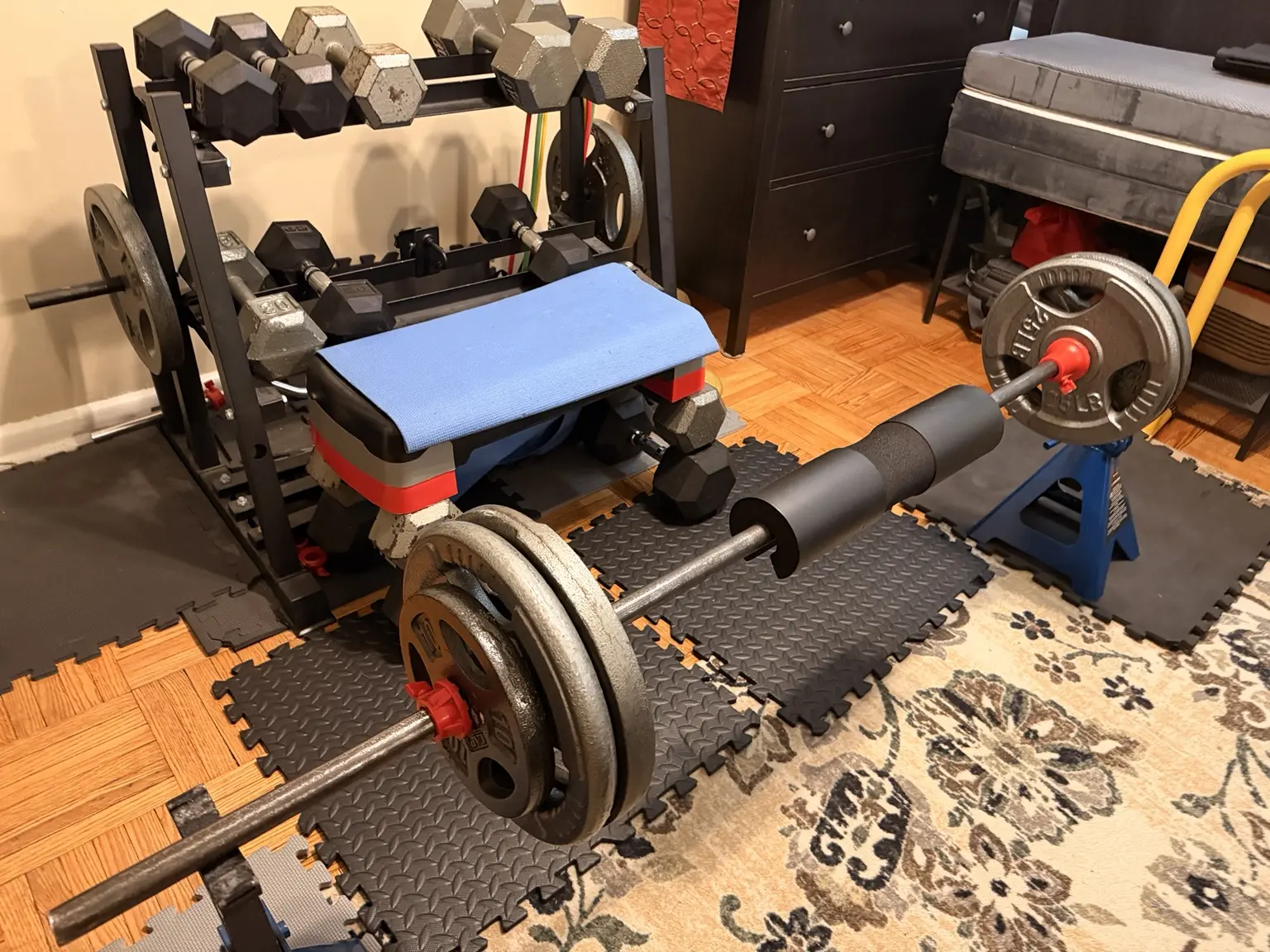
This is the arrangement I use for hip thrusts in my compact home gym. The padded bar rests within reach, my upper back is supported and the floor mats define the working area.
This is my personal setup—not a recommendation to copy it. Jack stands, stacked dumbbells and improvised platforms are not necessarily designed or rated as exercise supports and can shift. A purpose-built rack with safeties and a stable bench or hip-thrust platform is the safer choice. Whatever you use, check its stability and load rating before every session.
BANDED GLUTE KICKBACKS
A small attachment adds another movement.
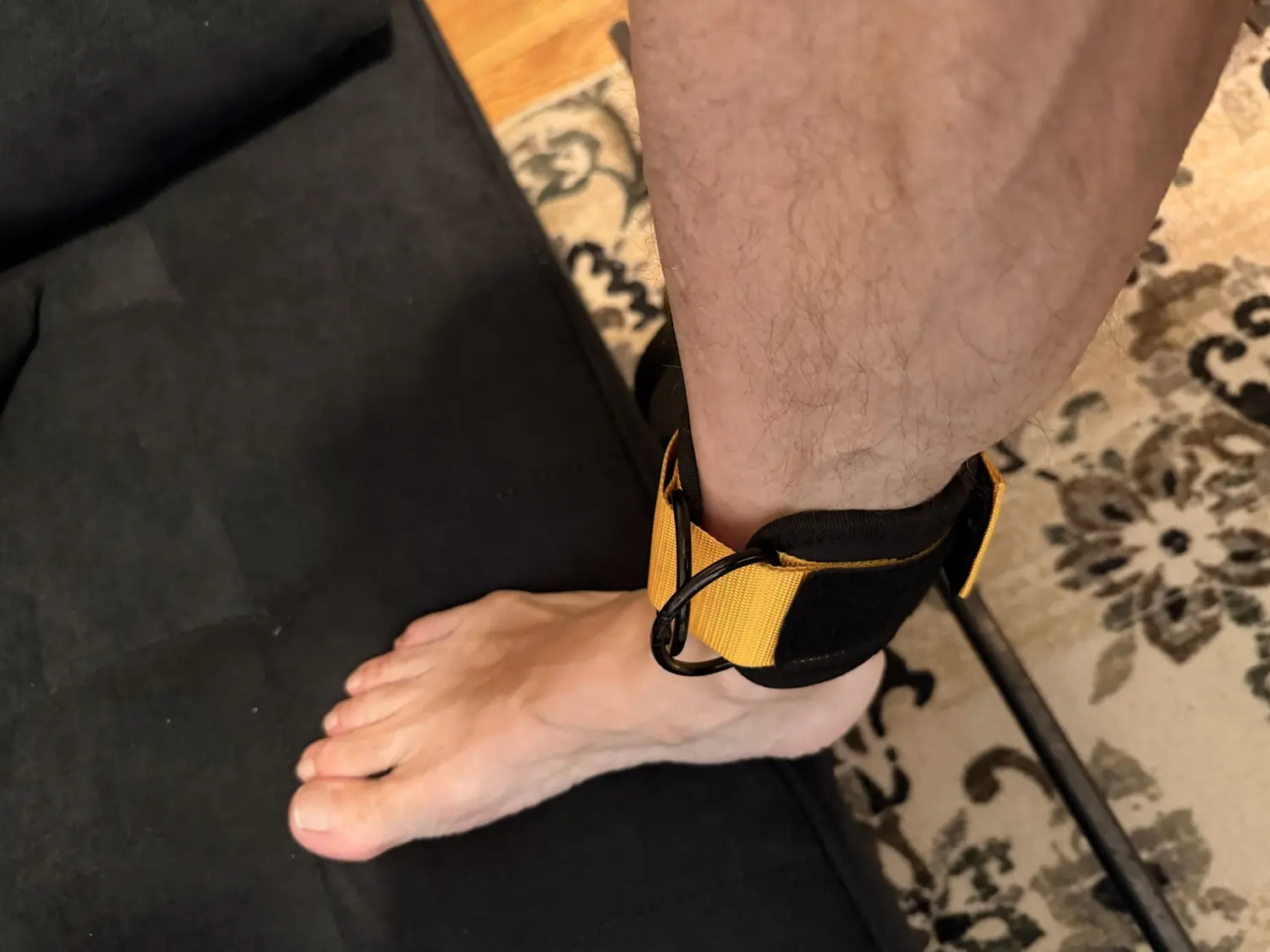
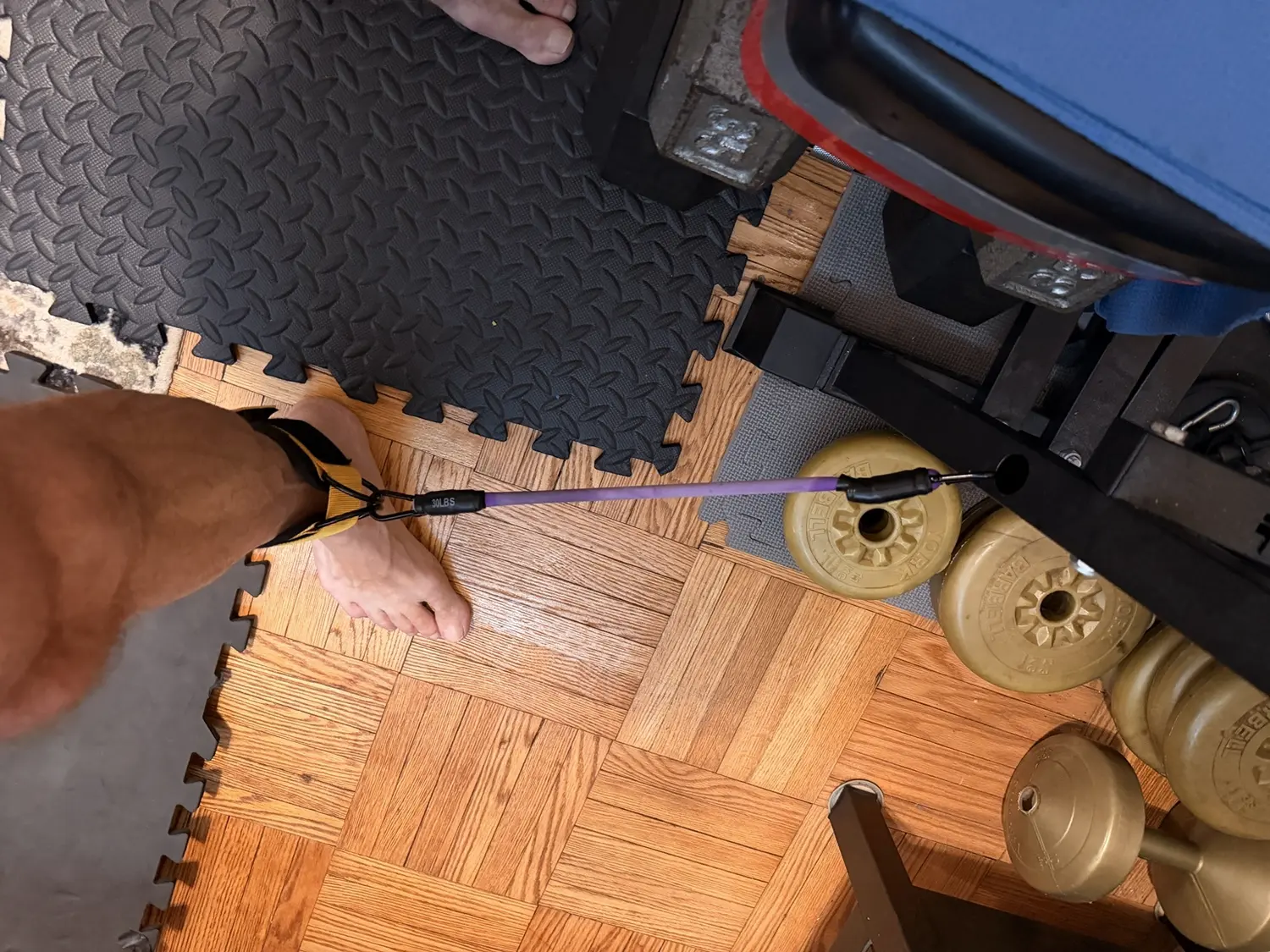
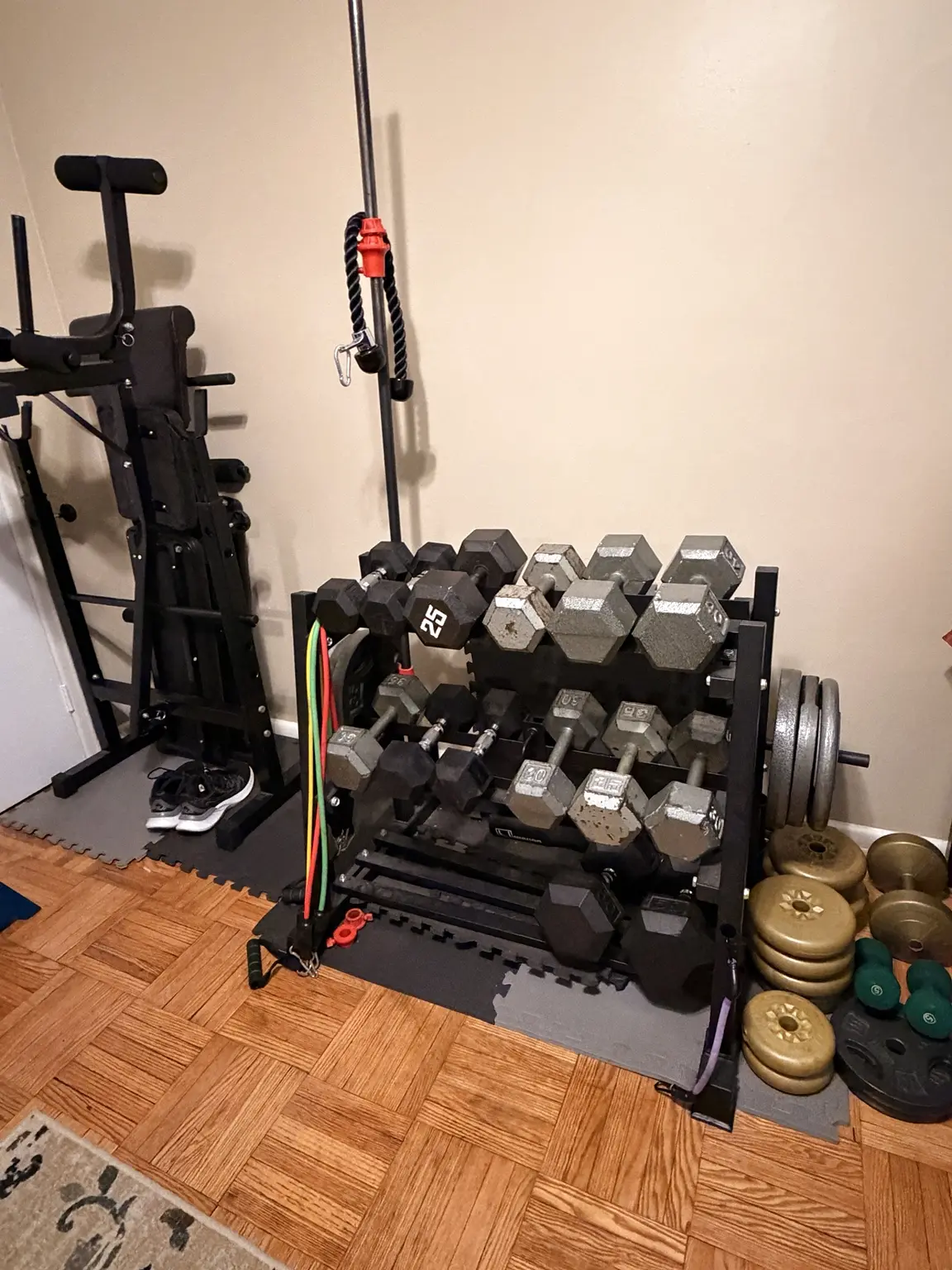
I connect a resistance band to a low point on my dumbbell rack and clip the other end to a padded ankle cuff. It gives me a simple way to perform controlled glute kickbacks without a cable machine.
Setup check: I inspect the band, cuff, clips and anchor before training, keep the pull in line with the attachment and make sure the rack cannot slide or tip. Resistance bands should be replaced if they show cracking, thinning or other damage.
READY FOR THE NEXT STEP?
Three-day foundation.
Move here when the two-day routine feels comfortable, or begin here if you already have some exercise experience. Train on non-consecutive days, use light resistance and finish each set knowing you could still complete two or three good repetitions.
Full body A
- Goblet squat or chair squat2 sets
- Dumbbell press or incline push-up2 sets
- One-arm dumbbell row2 sets
- Glute bridge2 sets
Full body B
- Step-up or supported split squat2 sets
- Band lat pulldown2 sets
- Dumbbell shoulder press2 sets
- Band abduction2 sets
Full body C
- Light Romanian deadlift2 sets
- Flat dumbbell press2 sets
- Supported dumbbell row2 sets
- Glute bridge or hip thrust2 sets
Progress slowly: when every repetition feels controlled and pain-free, add one or two repetitions before increasing the resistance. Stop and seek appropriate medical guidance for chest pain, dizziness, unusual shortness of breath or persistent joint pain.
These are examples of how I train and how a newcomer might begin—not individualized medical or exercise advice. Exercise selection, effort and volume should match your health, experience and recovery. If you have a health condition, significant pain or have been inactive for a long time, speak with a qualified healthcare or fitness professional before starting.
MY ACTUAL WORKOUT SPACE
Built in a real room,
one piece at a time.
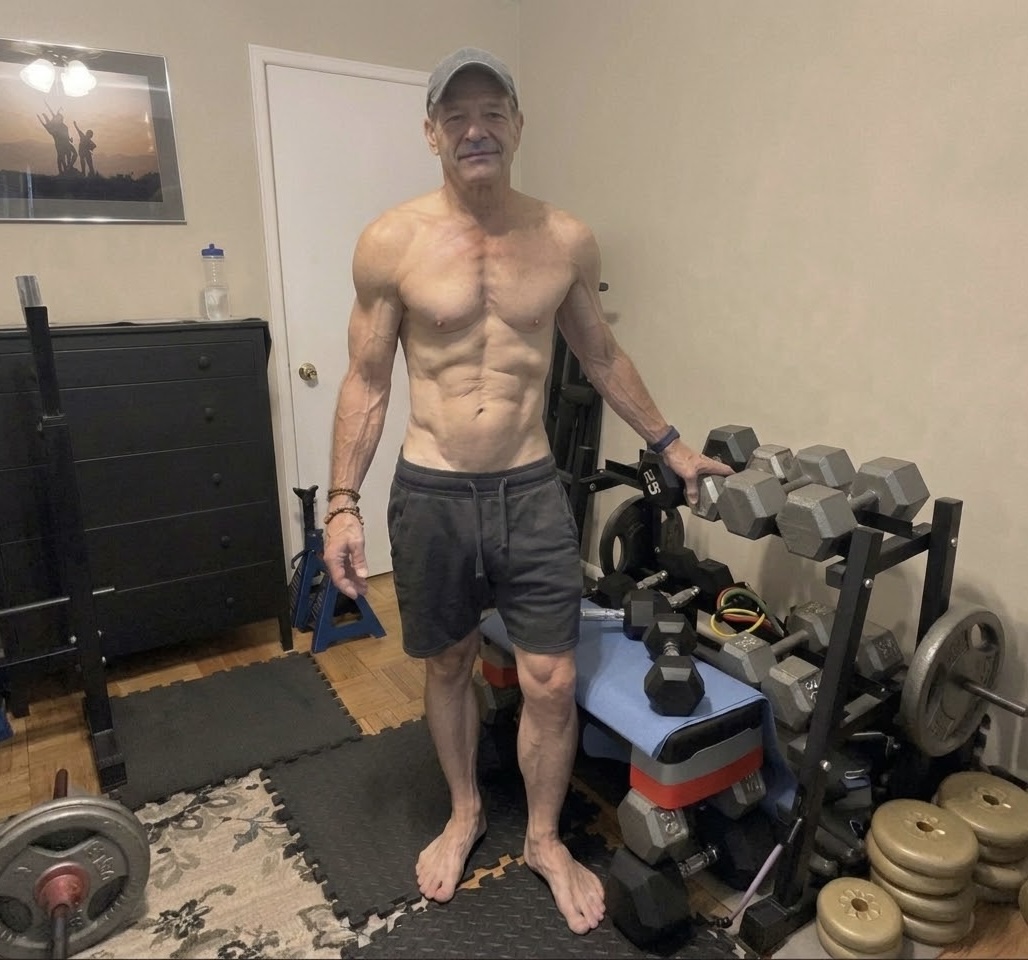
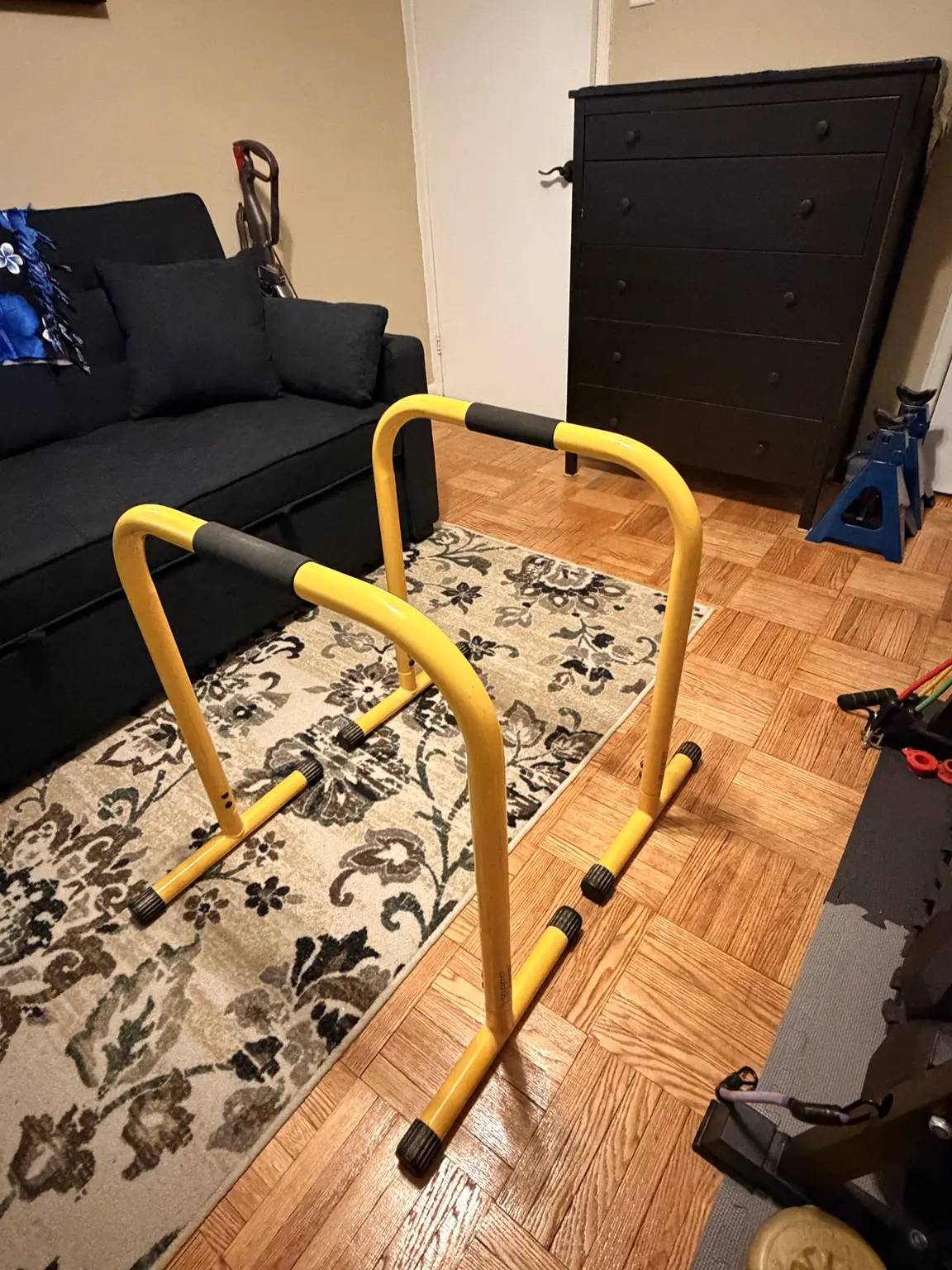
This is where I do the work: a bench, dumbbells, resistance bands and simple equipment arranged around everyday living space. It isn’t a polished commercial gym—and that is exactly the point. A practical setup you will use matters more than a perfect room you are waiting for.
MOVEMENT GUIDE
The first movement
guide is here.
I’m adding clear starting and finishing positions from short demonstration videos. The incline barbell press, dumbbell and barbell biceps curls, Romanian deadlift, hip thrust, one-arm dumbbell row, band glute kickback, goblet squat, chest fly variations and band triceps pushdown are here, with more movements to follow.
Incline barbell press
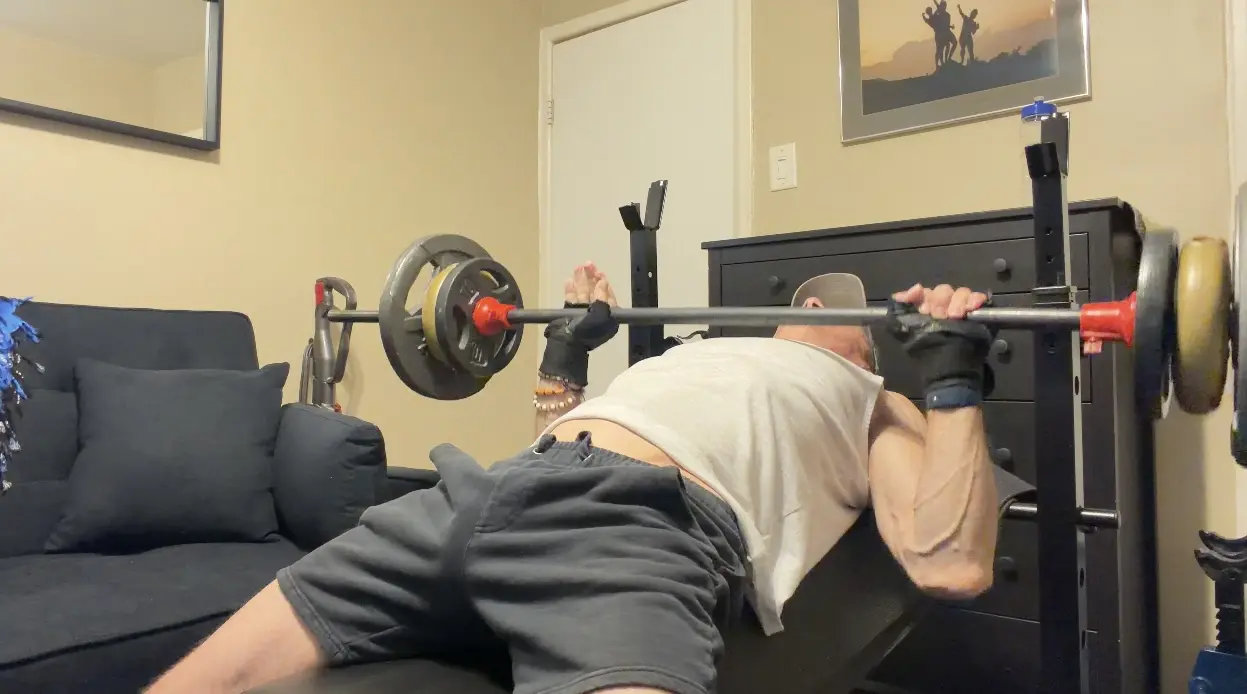
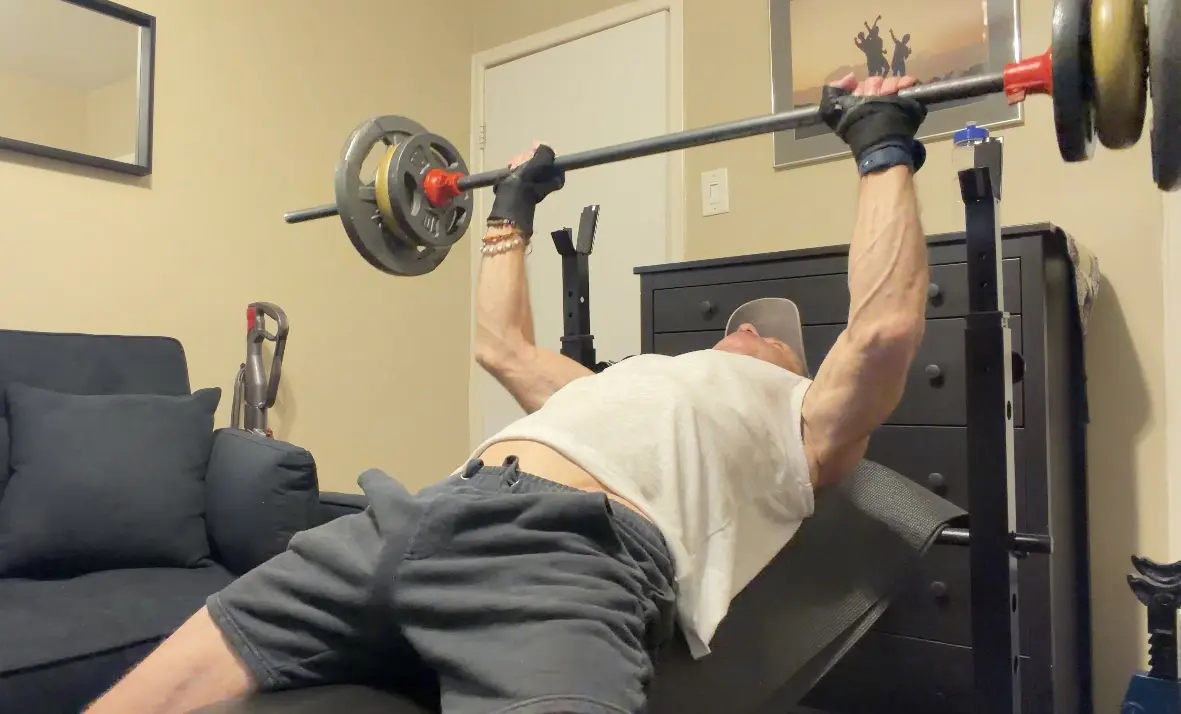
Lower the bar under control toward a comfortable upper-chest position. Press smoothly until your arms are nearly straight—you do not need to forcefully snap the elbows into lockout. Keep your wrists stacked over your forearms and your shoulder blades set against the bench.
Safety: use a spotter or correctly positioned safety arms when pressing alone, particularly as the load becomes challenging.
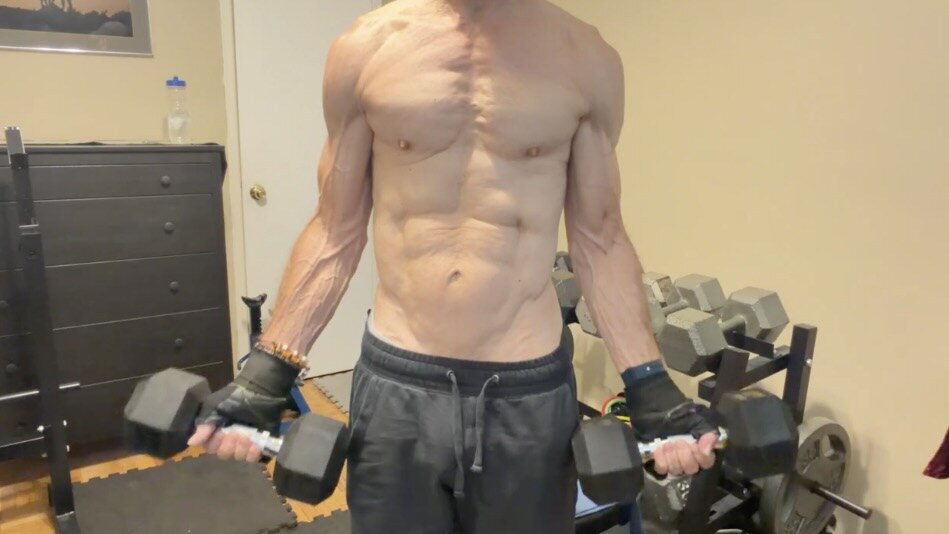
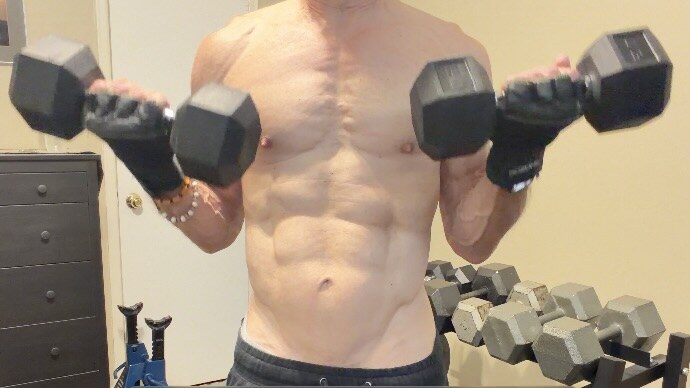
Dumbbell biceps curl
Stand tall with your wrists straight and your elbows close to your sides. Curl without swinging, pause briefly near the top and lower the dumbbells slowly under control.
Elbow comfort: use a comfortable grip and load. If a palms-up curl irritates the elbow, a neutral-grip hammer curl may feel better.
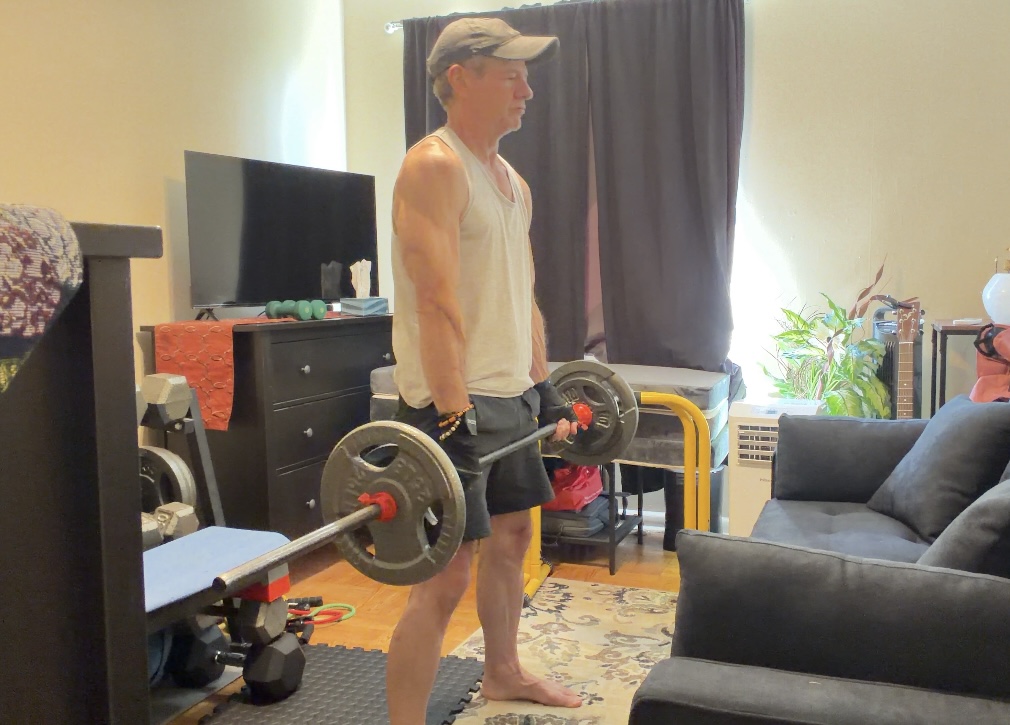
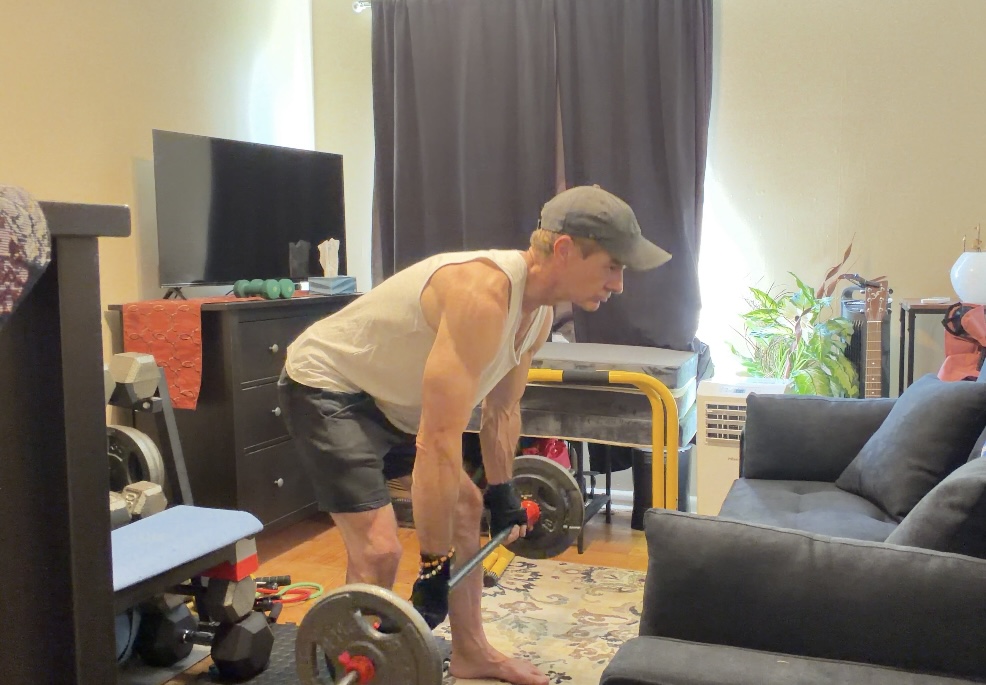
Romanian deadlift
Begin tall with the bar close to your thighs and your knees softly bent. Push your hips back while keeping the bar close to your legs and your spine comfortably neutral. Stop when you feel a strong hamstring stretch without losing position, then drive the hips forward to stand tall.
Control: use a manageable load and a pain-free range. The movement comes from the hips—not from reaching the bar toward the floor or rounding the lower back.
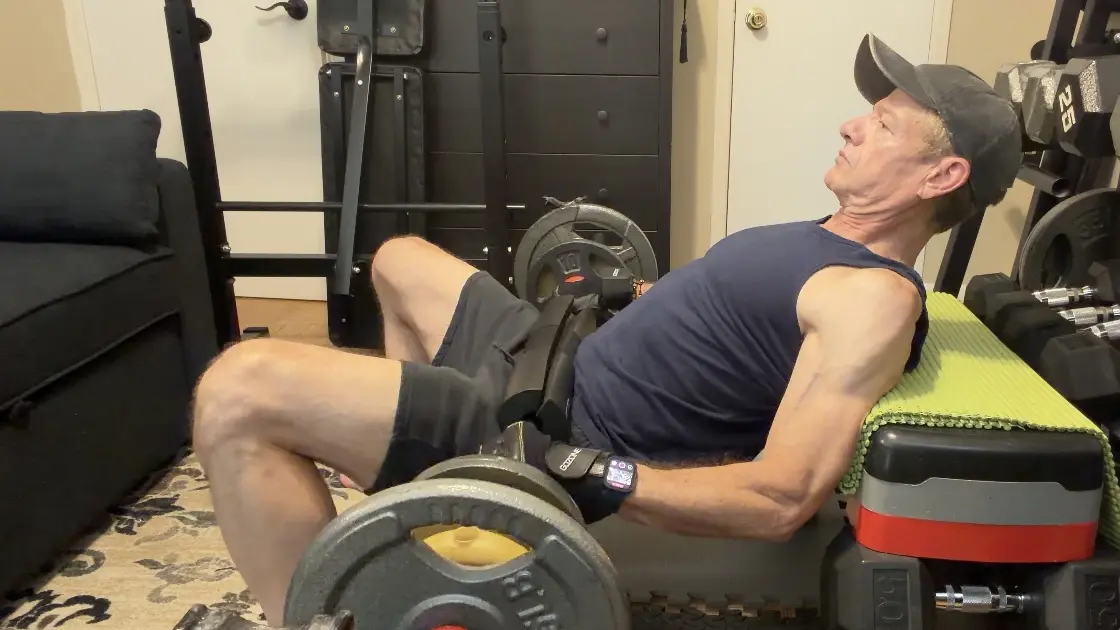
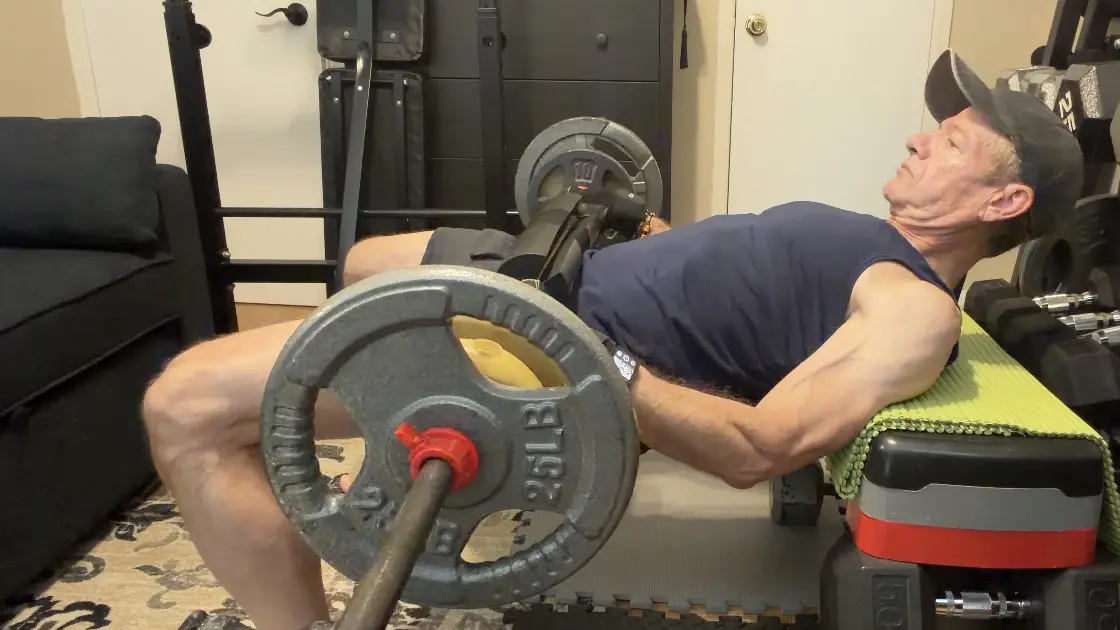
Hip thrust
Place your upper back against a stable support, set your feet firmly and keep the bar centred over the hips with adequate padding. Drive through your feet, squeeze the glutes and finish when your hips are extended without forcing the lower back to arch. Keep your ribs controlled and your chin gently tucked, then lower smoothly.
Setup safety: the support must be secure and unable to slide, tip or collapse. My compact arrangement is personal to my space—a purpose-built bench or hip-thrust platform is the safer choice for anyone setting up this movement.
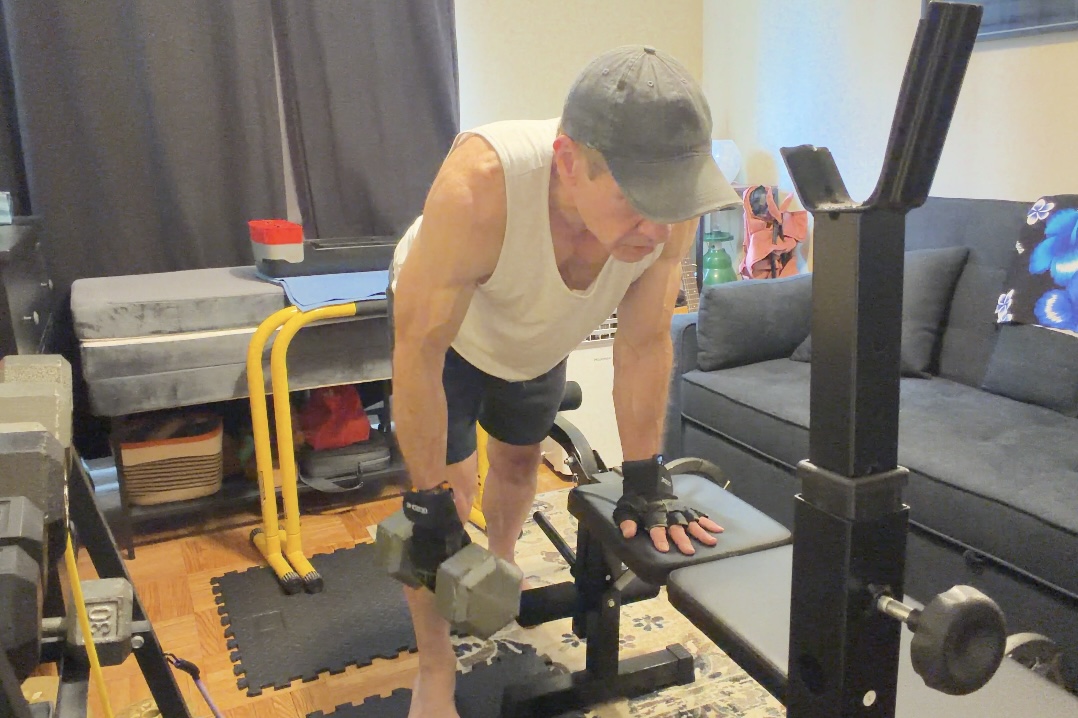
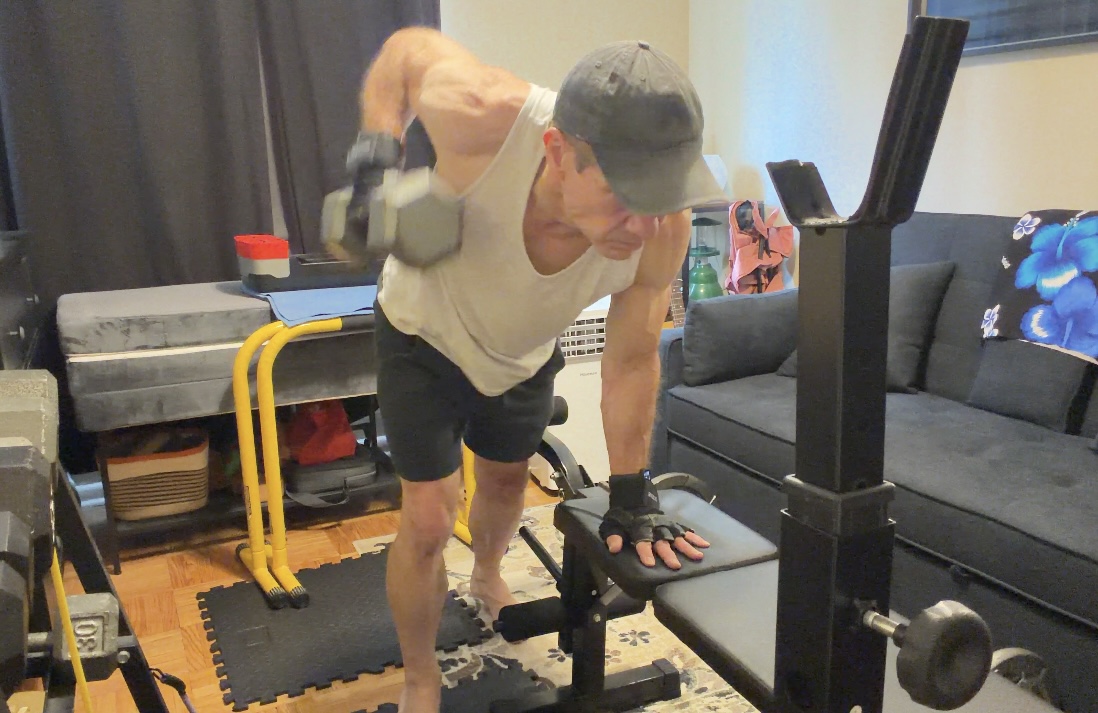
One-arm dumbbell row
Support yourself on a stable bench, brace your torso and let the dumbbell hang beneath your shoulder. Pull your elbow toward your hip without twisting your body, stop around torso height and lower the weight slowly under control.
Position: keep your shoulders reasonably square to the floor and your neck comfortable. Use a load that lets you move smoothly without jerking or rotating to finish the repetition.
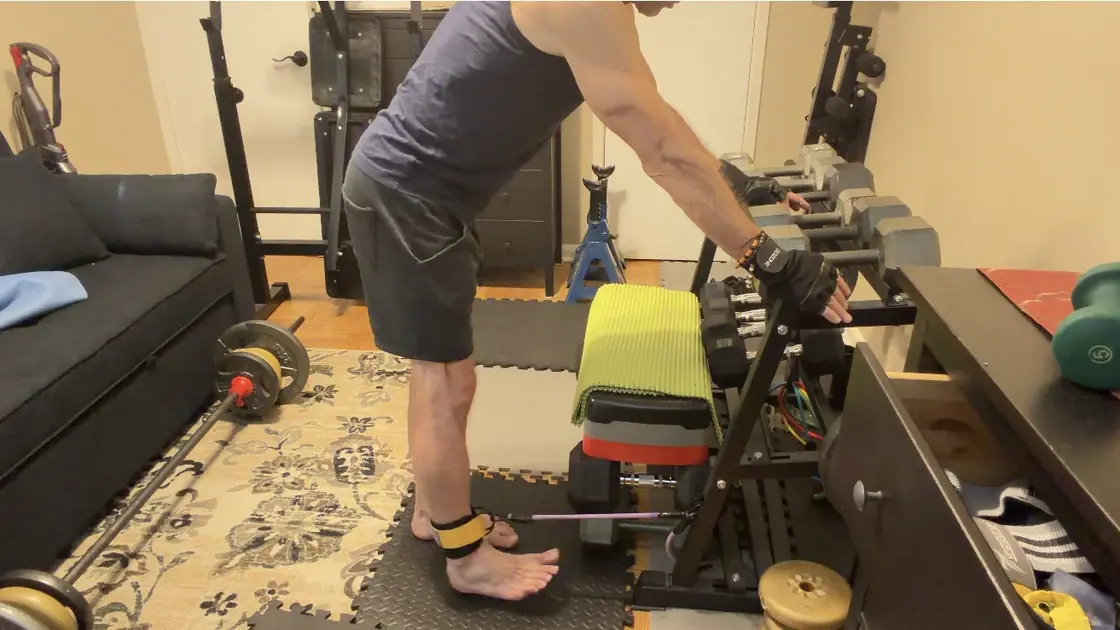
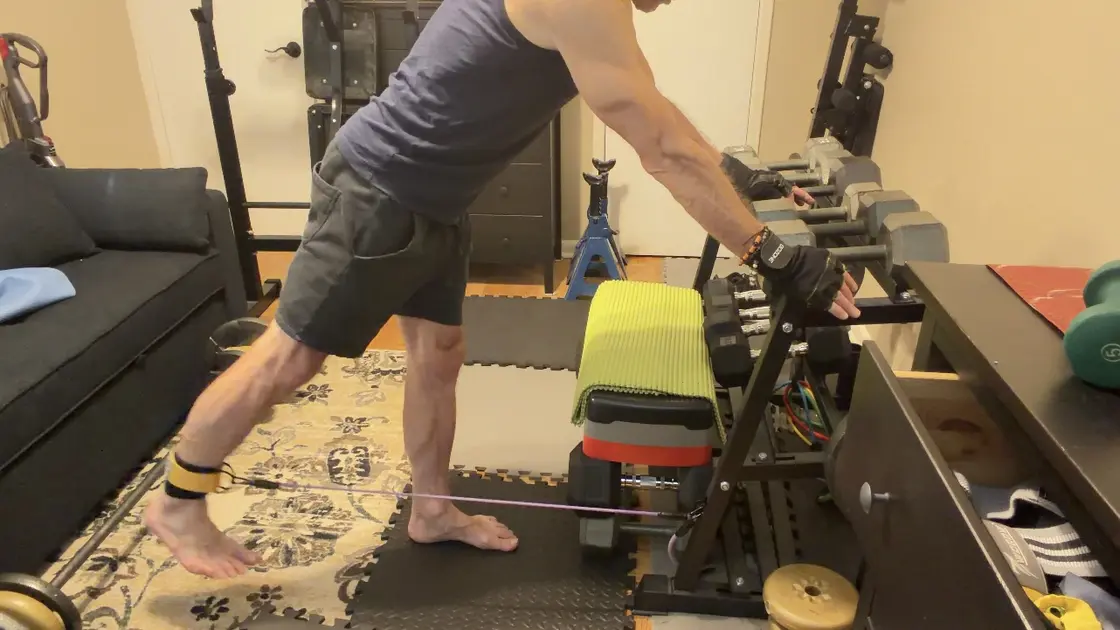
Band glute kickback
Hold a stable support, soften the standing knee and begin with the working leg under your hips. Keep your torso and pelvis steady as you drive the cuffed leg backward by squeezing the glute. Stop before your lower back arches or your hips rotate, then return slowly under control.
Anchor check: secure the band to a low, stable point that cannot slide or tip. Inspect the band, cuff and clips before every session and replace damaged equipment.
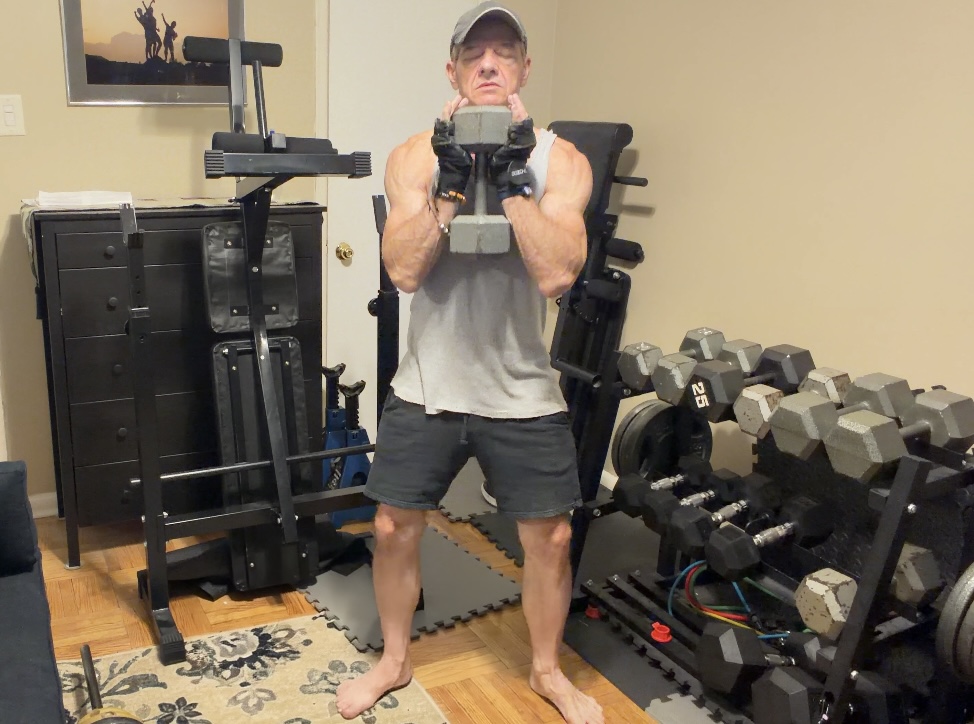
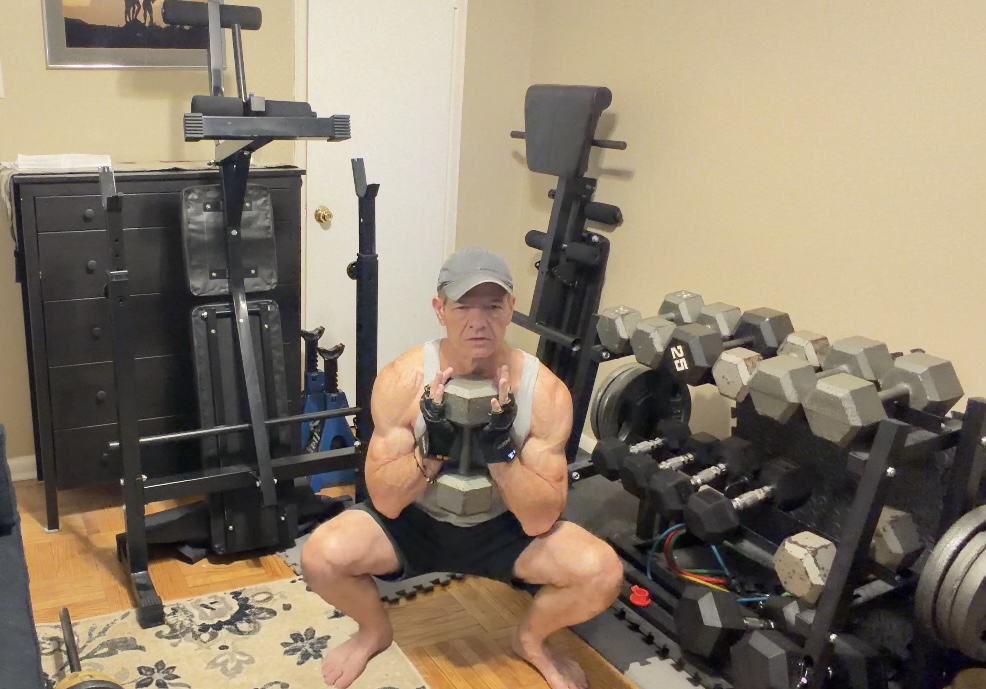
Goblet squat
Hold the dumbbell securely against your chest, brace gently and sit down between your hips. Keep your heels planted and let your knees follow the direction of your toes, then drive through your feet to stand tall under control.
Choose your depth: descend only as far as you can while keeping your balance, heels down and spine controlled. You do not need to match my depth; a chair squat or shallower range is a good starting variation.
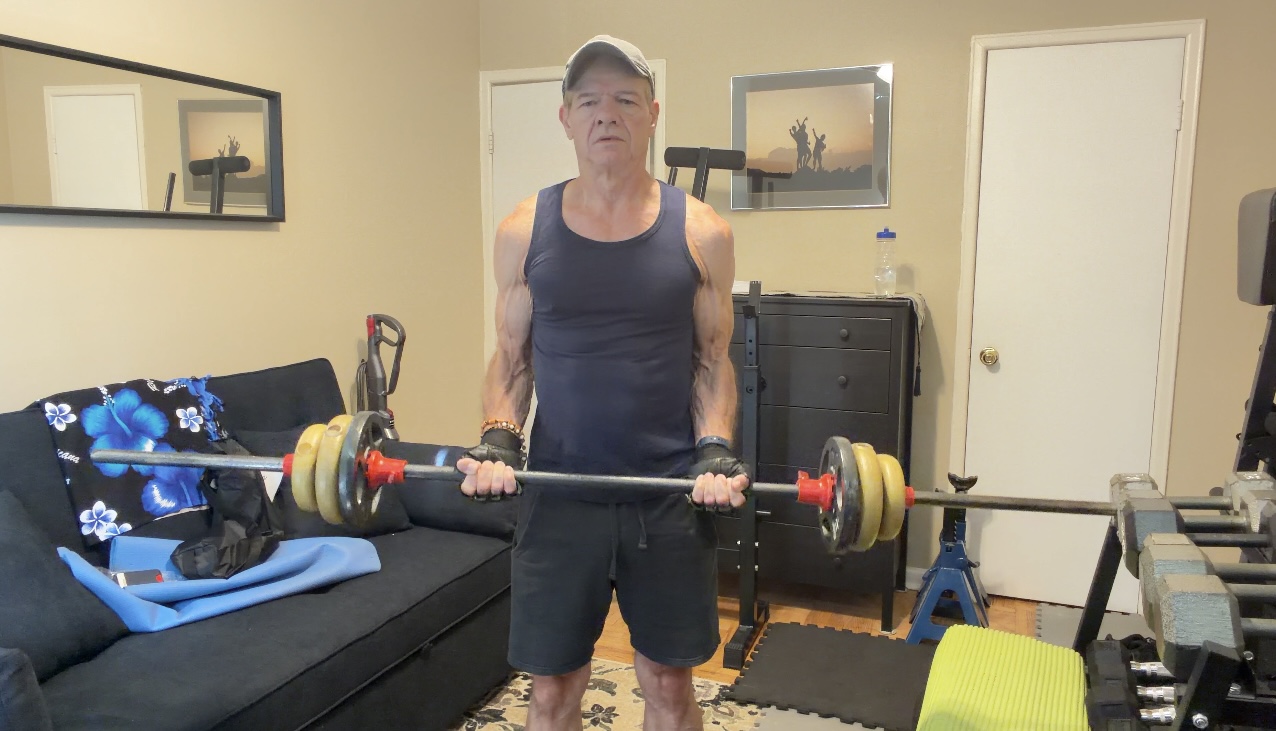
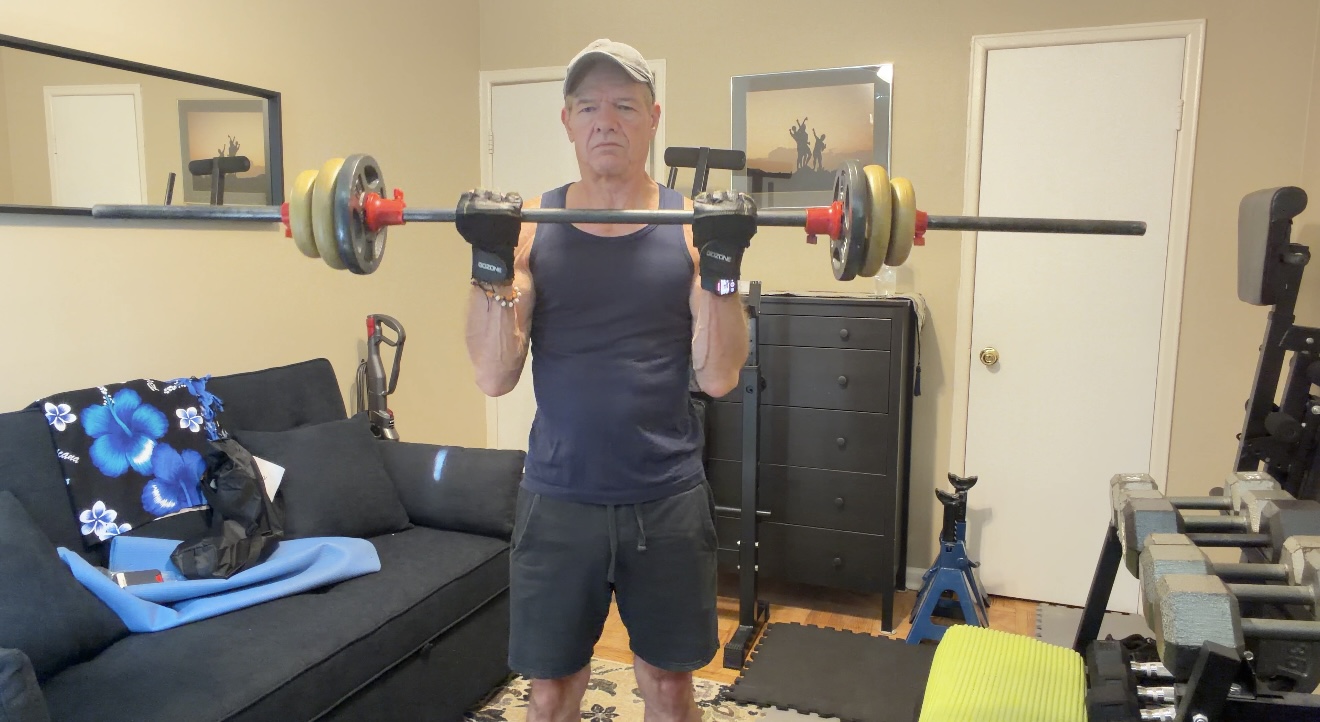
Barbell biceps curl
Stand tall with your feet planted, wrists straight and elbows close to your sides. Curl the bar without leaning back or swinging, then lower it deliberately until your arms are nearly straight while keeping tension and control.
Elbow and wrist comfort: use a manageable load and a grip that feels natural. A straight bar does not suit everyone; use dumbbells, a neutral grip or an EZ-curl bar if it causes discomfort.
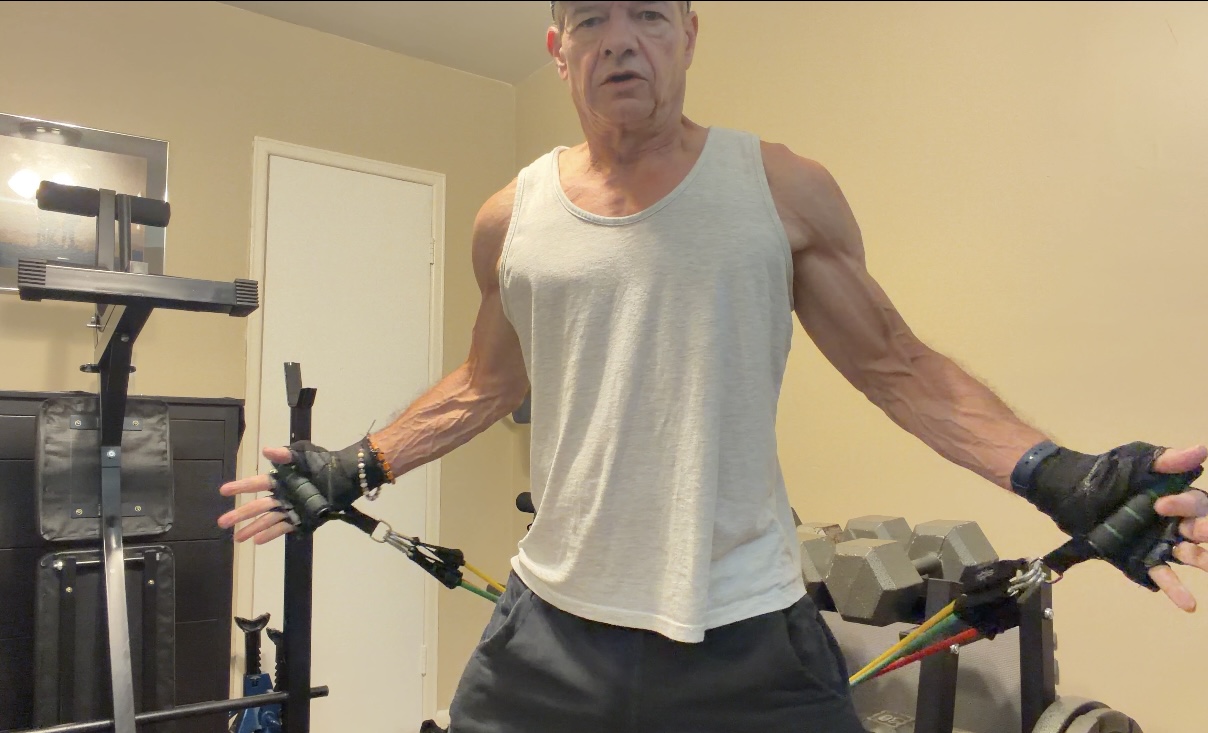
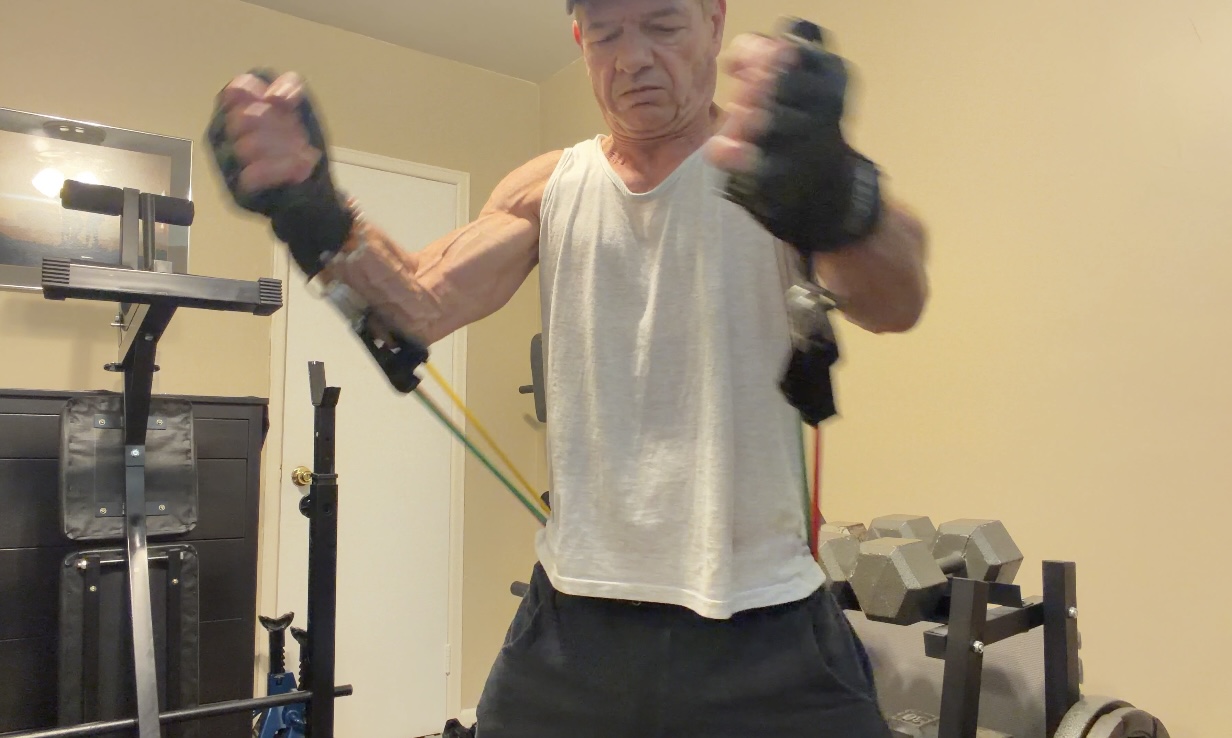
Resistance-band chest fly
Keep a slight bend in the elbows and bring the hands together in a controlled arc. Return slowly to the starting position rather than letting the bands pull your arms back.
Anchor check: secure the bands to a stable point that cannot slide or tip. Inspect the bands, handles, clips and anchor before every session.
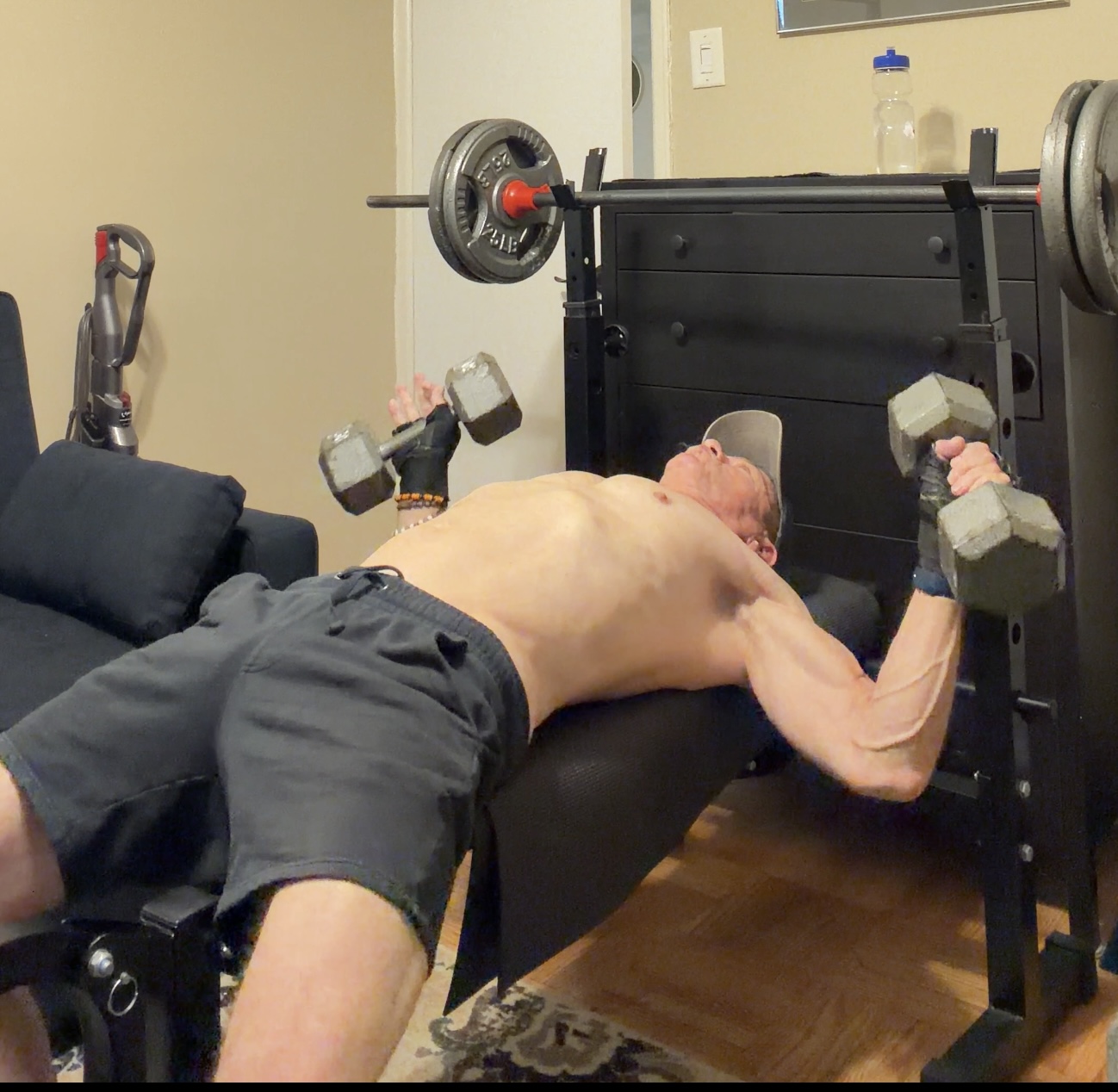
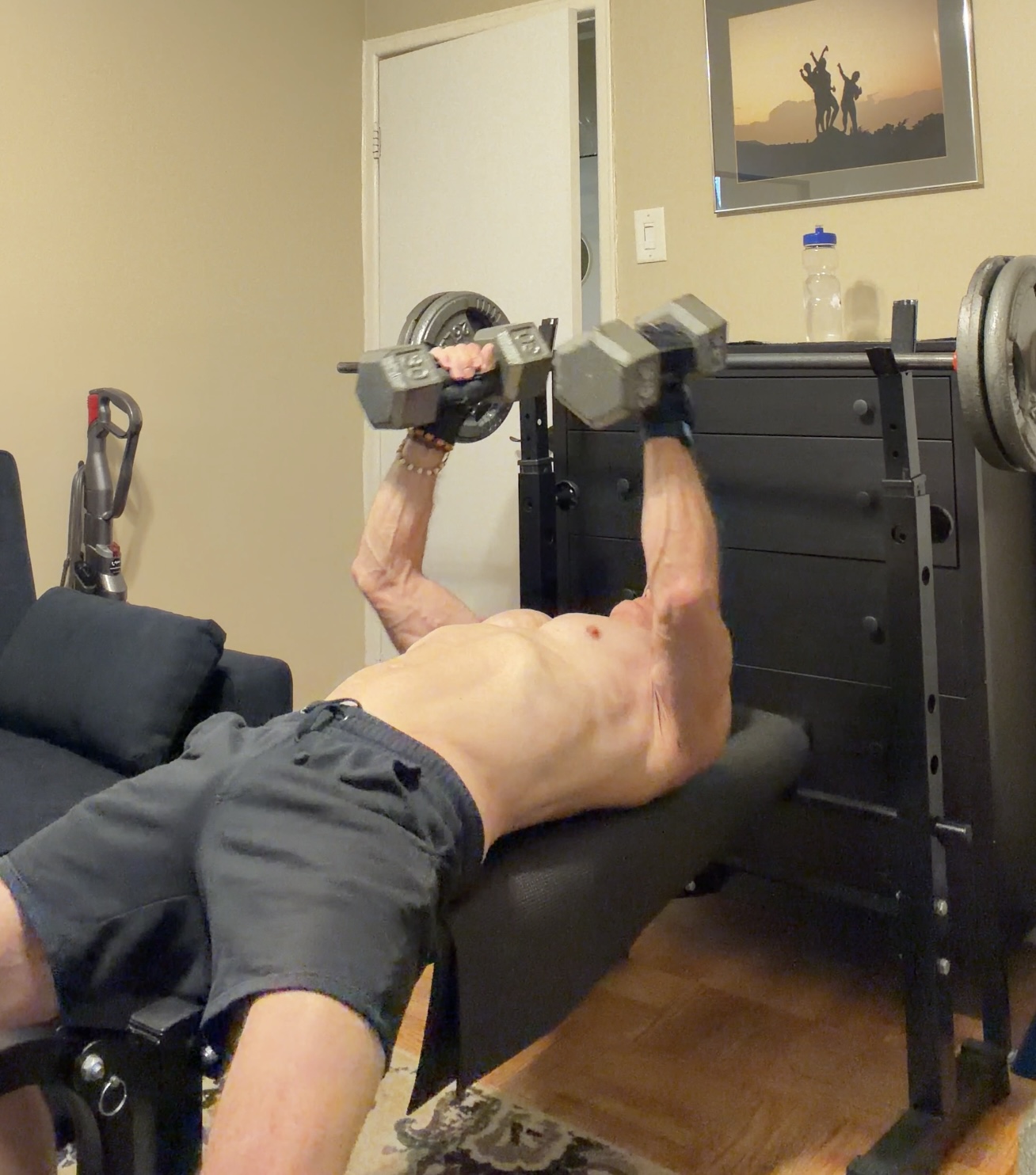
Dumbbell chest fly
Begin with the dumbbells above your chest and keep a soft, fixed bend in your elbows. Open your arms in a controlled arc only as far as your shoulders feel comfortable, then bring the weights back together by squeezing the chest.
Shoulder comfort: use a lighter weight than you would for pressing, keep the movement smooth and avoid dropping your elbows excessively below bench level. Stop if you feel sharp or unusual shoulder pain.
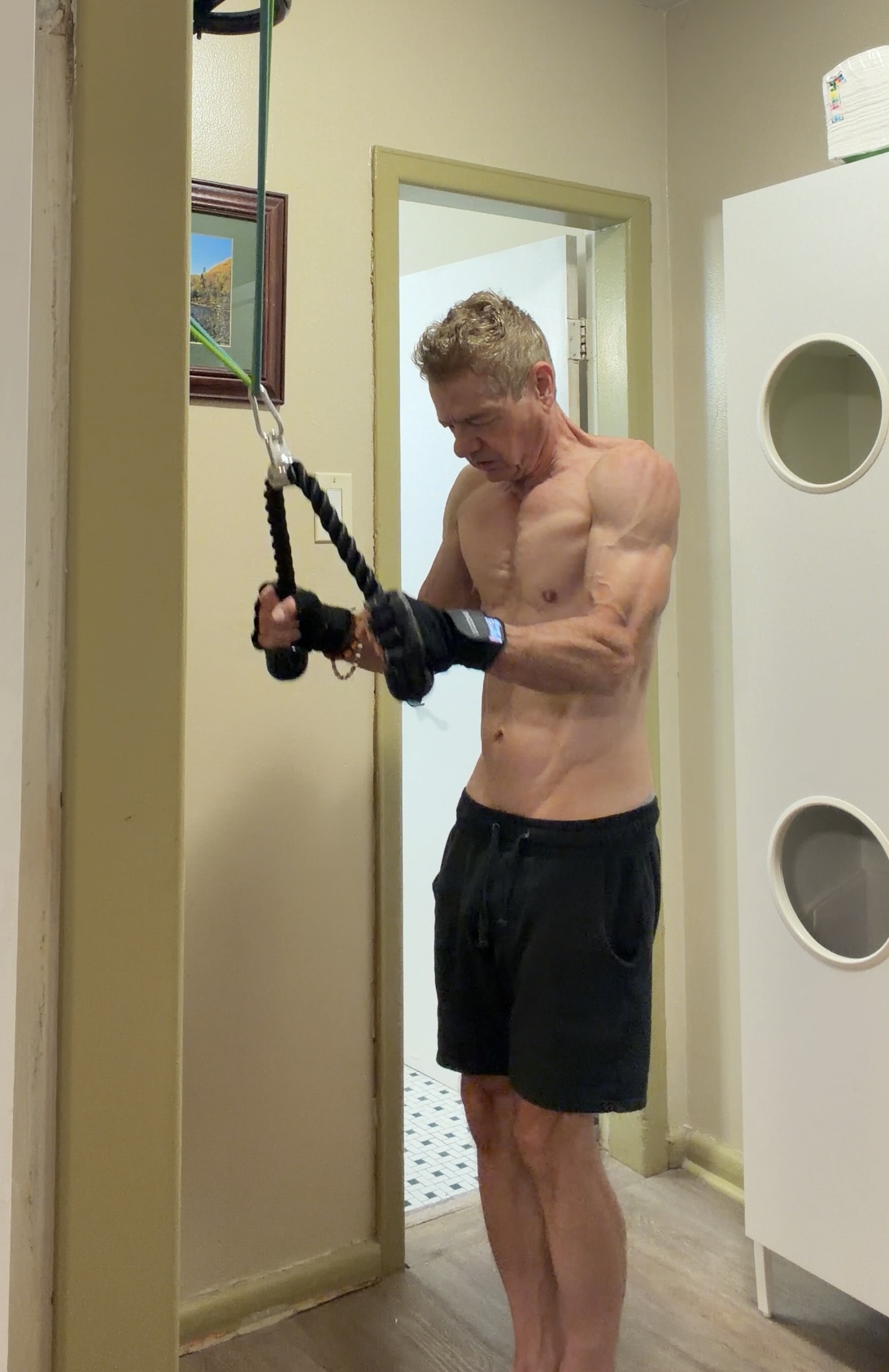
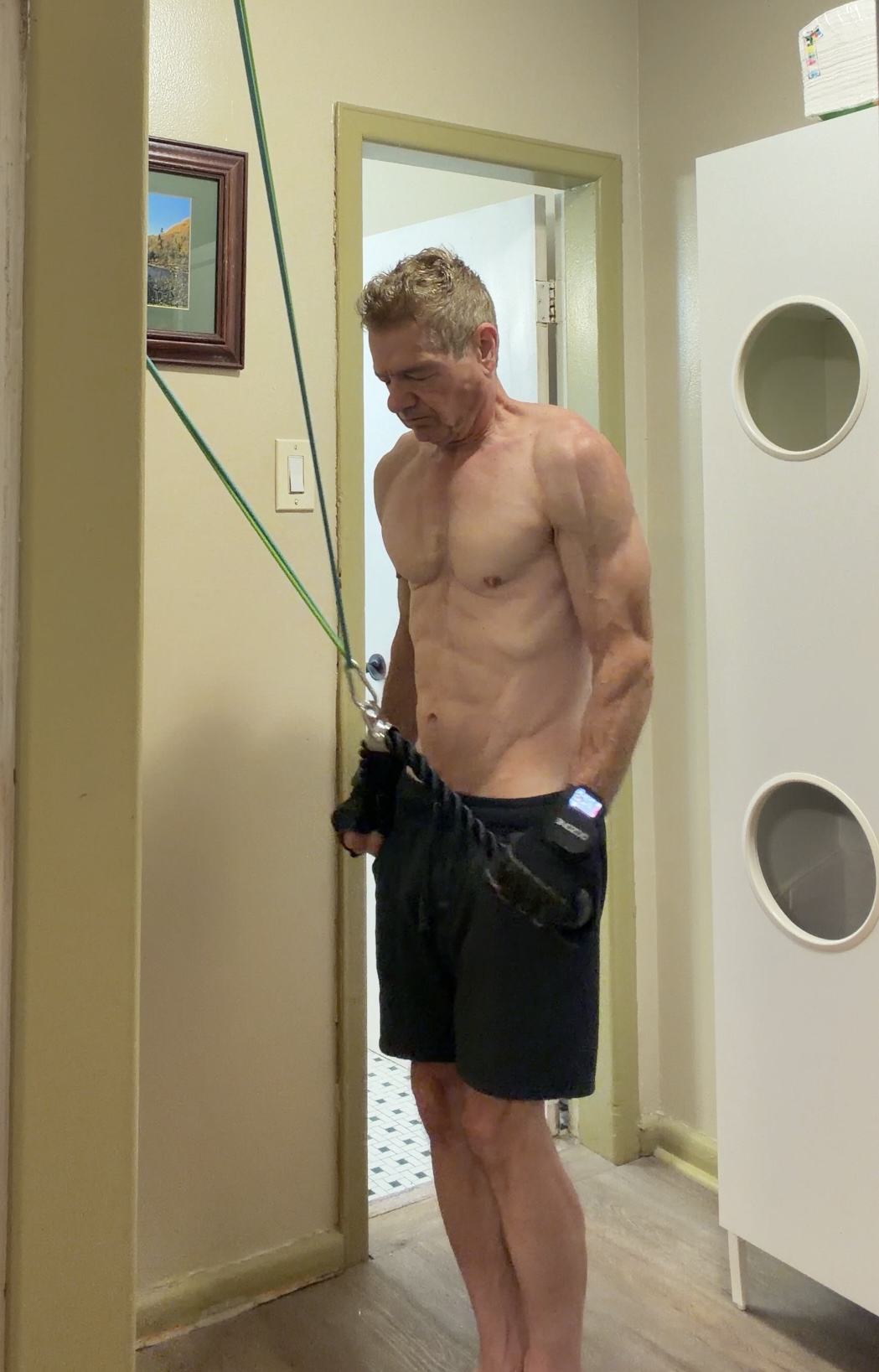
Band triceps pushdown
Stand tall with your elbows tucked beside your torso. Keeping your upper arms still, press the rope down until your arms are nearly straight, then return slowly under control without letting the band pull your elbows forward.
Anchor check: secure the band to a stable overhead point and inspect the band, rope, clip and anchor before every session. Use a resistance you can control without leaning or forcefully locking the elbows.
More exercise demonstrations are on the way. Until they are added, use the written workout as an overview rather than a substitute for hands-on coaching. Start with a comfortable weight, choose pain-free movements and work with control.
BEYOND THE BAR
Recovery
is training.
Sleep
The work gets done in the gym. The adaptation happens at rest.
Protein
Build every meal around enough quality protein to support muscle.
Mobility
Move through comfortable ranges and keep the joints in the conversation.
THE BEST PROGRAM IS THE ONE YOU CAN KEEP DOING.