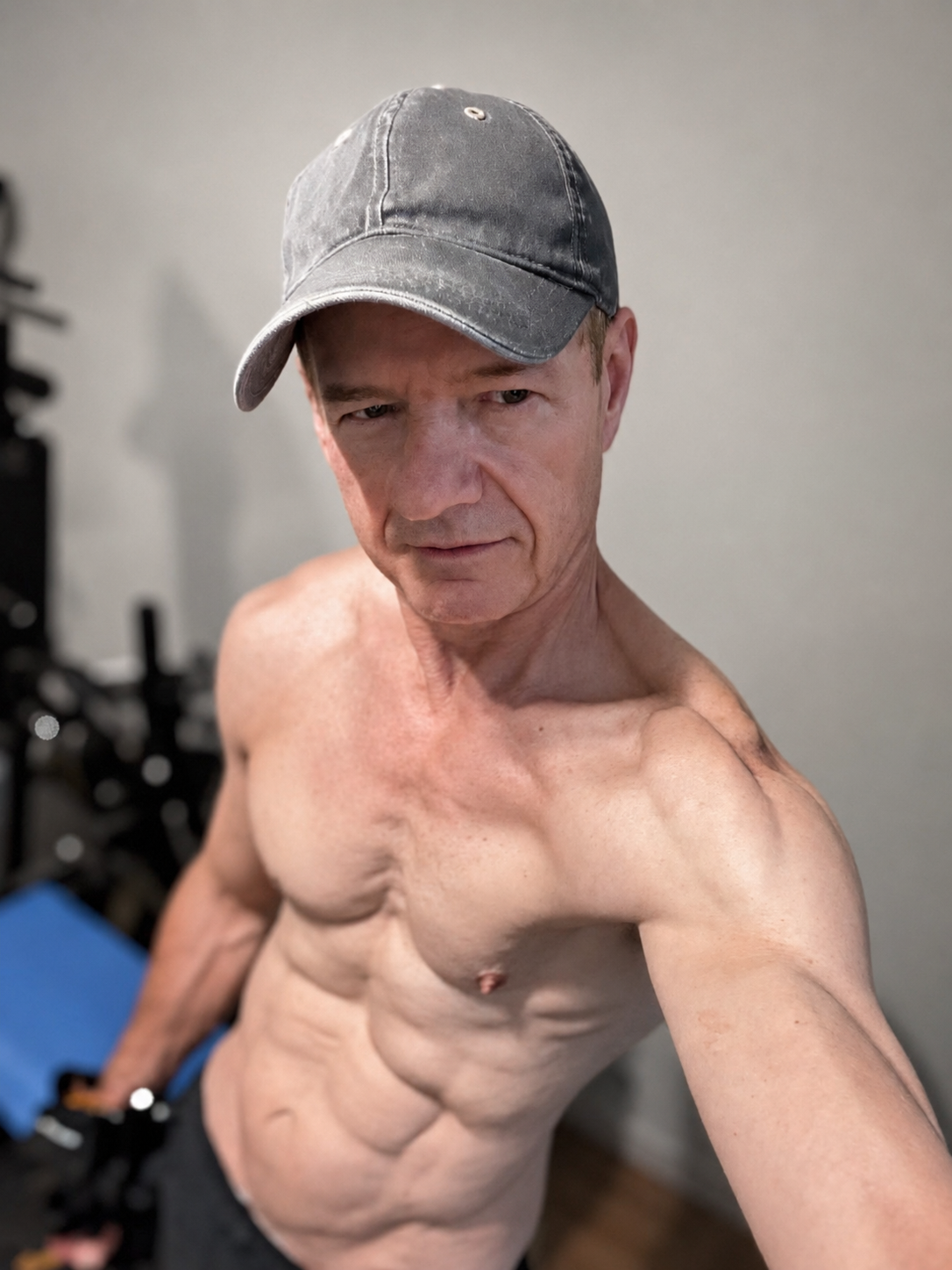
If you are 60 or older and thinking about lifting weights for the first time, you might wonder whether you have waited too long. You haven’t.
You do not need years of experience. You do not need an expensive gym. And you certainly do not need to begin by lifting heavy weights.
What you need is somewhere to begin, a willingness to learn and something I believe matters more than almost anything else: persistence.
Starting was the hardest part
I remember when something finally clicked for me. I started my job as a bus driver at 46, and about a year and a half later I noticed I was gaining weight. I remember thinking, I’m getting older. This has got to stop.
In my 20s, 30s and 40s, I would occasionally do a little 20-minute exercise routine when I felt I was putting on weight. I had never done much weight training. This time I decided it was going to be different.
I was going to start—and, more importantly, I was not going to stop.
Eventually, you notice changes. You may look different, but even better, you feel different. I remember walking the dog, going up stairs and suddenly feeling as though my legs were literally lifting me up the steps. I could feel that I was stronger.
I started on the floor with 10-pound dumbbells
When I first started lifting weights, I did not even own a bench. I had a very small space to work out in. I remember lying on the floor with a couple of light dumbbells—probably around 10 pounds—and carefully doing dumbbell presses.
That was my chest workout. It was not impressive, and I did not have a rack full of equipment. But I was lifting.
Eventually, I bought a bench and added a few more dumbbells. I tried different weights until I found something I could comfortably control for around six to eight repetitions. From there, I kept going.
Do not wait until you have the perfect setup. Start with what you have.
Don’t worry about how much weight you can lift
It is easy to look at someone who has trained for years and think that is where you should begin. It is not.
When you are starting, the number printed on the dumbbell matters far less than whether you can control it. Begin light enough to learn the movement without swinging, jerking or struggling just to complete a repetition.
As you become stronger and more comfortable, increase the challenge gradually. That might mean a little more weight, another repetition, an extra set or simply better control. There is no prize for starting heavy.
Learn the movement first
Before worrying about building bigger muscles, learn how each exercise feels. Do not rush through the repetitions. Control the weight while lifting it and while lowering it.
You may hear the lowering portion called the eccentric or negative part of a movement. Do not get hung up on the terminology. The simple version is: do not just lift the weight. Control the weight.
A lighter dumbbell can become surprisingly challenging when you stop rushing.
Your body doesn’t care what someone else is lifting
Maybe you can press 10 pounds. Maybe it is 20. Maybe you need to begin with a movement that uses no weight at all. That is fine. Your starting weight is simply your starting weight.
Some mild muscle soreness can happen when you ask your body to do something unfamiliar. Pain is different. Sharp pain, sudden pain, significant joint pain or anything that feels plainly wrong is not something you need to push through.
You want to challenge your muscles. You do not want to hurt yourself. If you have an injury, medical condition or uncertainty about an exercise, advice from a doctor, physiotherapist or qualified fitness professional is a sensible first step.
You don’t need a gym
If you want to join a gym, great. But do not let the absence of a membership become a reason to put this off. A beginner can accomplish a lot at home with very little equipment.
A pair of dumbbells can be enough to begin. Resistance bands and bodyweight movements can also be useful. My equipment improved later. I started first.
Choose a schedule you can maintain
You do not need to begin with five workouts a week. Two or three strength-training sessions can be an excellent starting point, especially when you are learning how your body responds and recovers.
I would rather see someone train twice every week for six months than train almost every day for one week, miss the next week and eventually stop. Choose a realistic schedule, then protect those days.
Keep the beginning simple
You do not need a long list of exercises or a complicated system. Learn a few basic movements, start with one or two controlled sets and give yourself time to understand what manageable effort feels like.
A common beginner range is around eight to 12 controlled repetitions, but the exact number is not magic. The final repetitions should become more challenging without your form falling apart. A brand-new lifter does not need to push every set to the absolute limit.
Recovery is part of the work
Training gives your body a reason to adapt. Recovery gives it the opportunity. Starting with a few sessions per week leaves days between them so you can see how your muscles and joints respond.
As your experience grows, you may decide to train more frequently. I eventually did. There is no reason to begin there.
Progress is more than adding weight
If you can complete your repetitions with good control and an exercise has become noticeably easier, try a small increase. If the heavier weight causes your form to fall apart, go back down.
An extra repetition is progress. Better control is progress. A slower lowering movement is progress. An extra set can be progress. Performing an exercise better than you could a month ago is progress.
One of the biggest mistakes is doing too much
When motivation arrives, it is tempting to change everything at once. You buy equipment, decide to exercise every day and do too much because you want results quickly. Then you are so sore or exhausted that the next session becomes much less appealing.
Give yourself permission to start small. You are not trying to prove what you can do for one week. You are building something you can continue for years.
Persistence beats the perfect workout
You can spend hours searching for the perfect exercise, repetition range, dumbbell or program. None of it will help if you do not keep showing up.
Life happens. Sometimes you will miss a session because you are sick, travelling or something important gets in the way. That is different from letting one missed day become a missed week and then a month. Get back to it.
Ready to put this into practice?
Explore my free 2-day and 3-day strength-training programs for people starting or returning to exercise after 60.
Explore Beginner Workout ProgramsI started on the floor in a tiny space with a couple of light dumbbells. You do not need a perfect home gym or impressive weights. Start where you are, use what you have and keep showing up.
This article shares my personal experience and is not medical advice. Consider speaking with your doctor or a qualified fitness professional before beginning a new exercise program, particularly if you have an injury, medical condition or persistent pain.
READY TO BEGIN?
Take your first step with a manageable plan.
If you are ready to begin, do not try to design a routine from scratch. My two-day First Steps plan gives you five simple movements to perform on two non-consecutive days. Start there, keep the resistance light and concentrate on control.