My pressure-cooker bone broth.
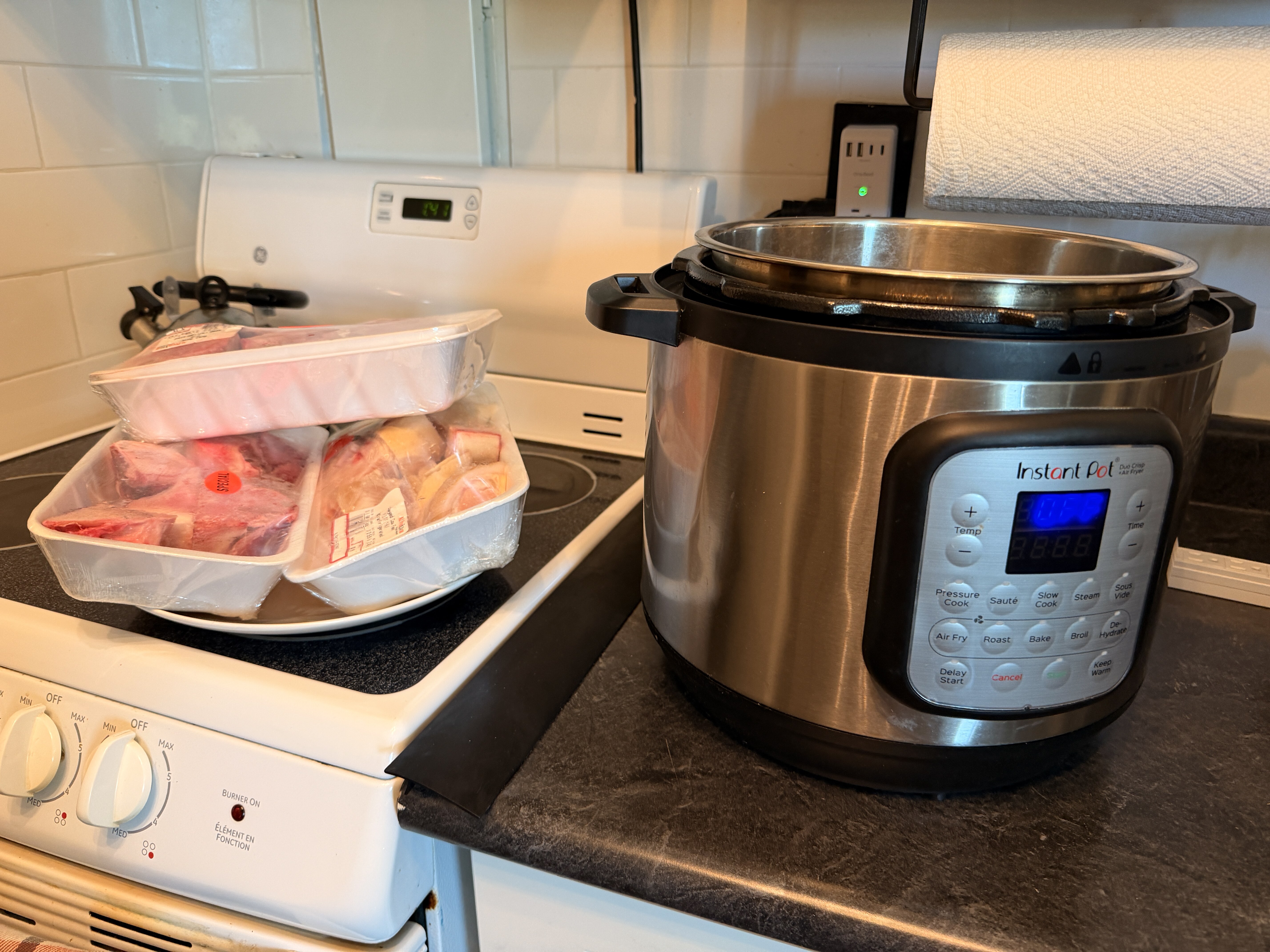
I use store-bought cow feet and beef bones and let the pressure cooker do the work. The finished broth is practical to drink warm or keep on hand for meat recipes.
METHOD
- 01
Load the cooker
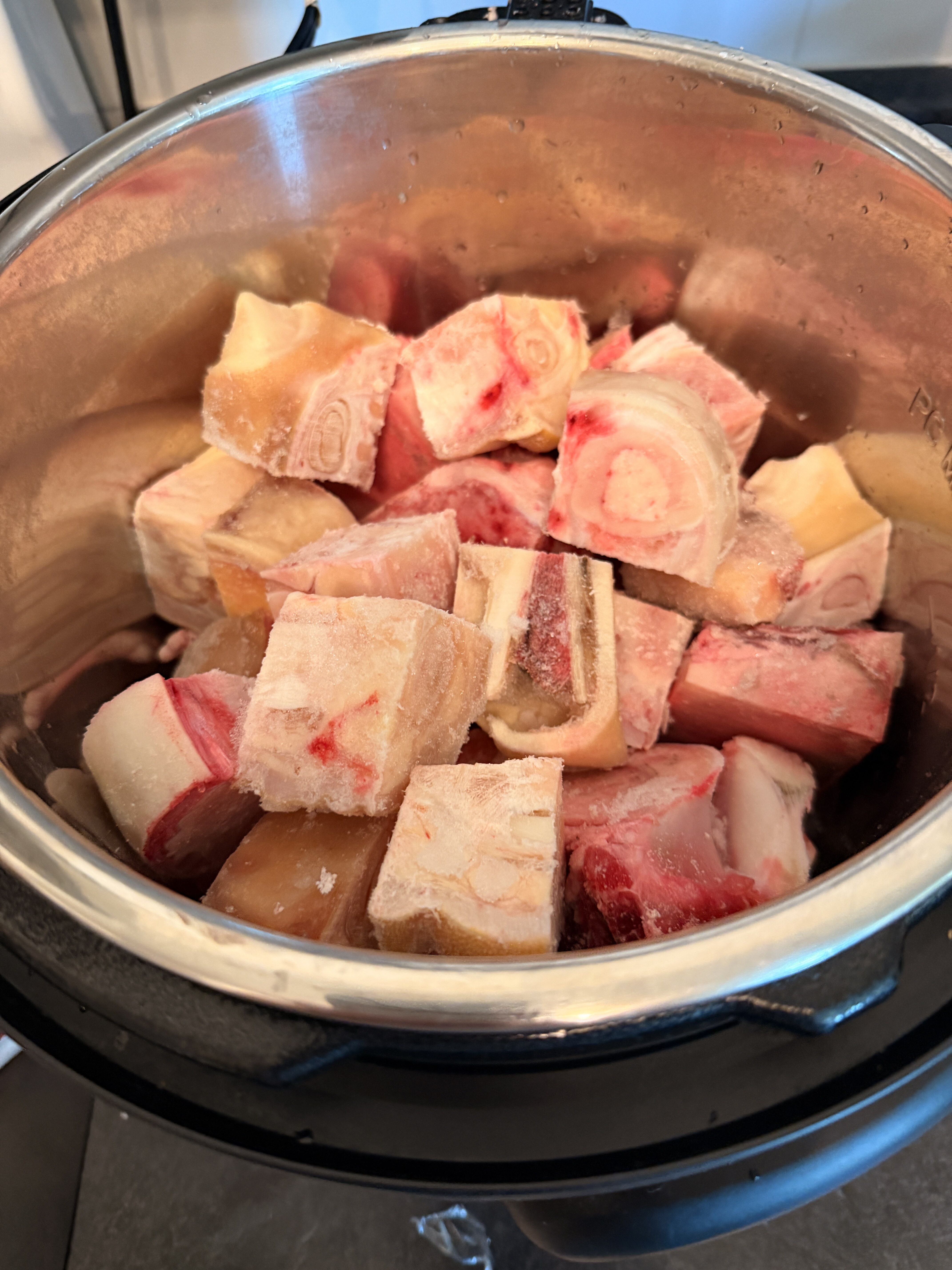
Place the beef bones and cow feet in the pressure-cooker insert. Add cold water to cover them, but stay below the maximum-fill line and follow the safety directions for your specific cooker.
- 02
Cook for four hours
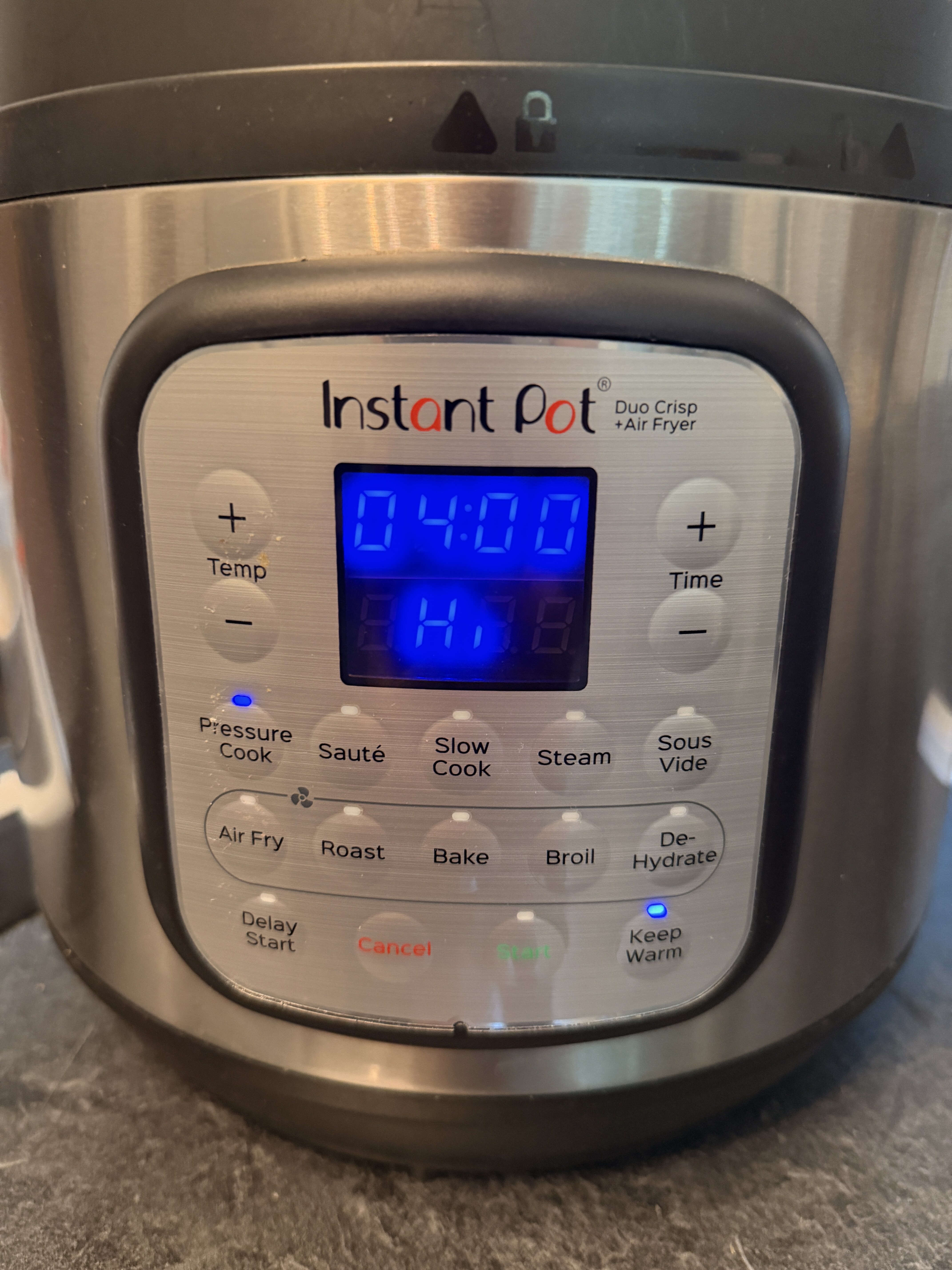
Secure the lid, make sure the valve is set correctly and cook on high pressure for 4 hours.
- 03
Let the pressure release
When the cooking time ends, allow the pressure to release naturally. Do not force the lid open; wait until the cooker indicates that it is safe.
- 04
Strain carefully
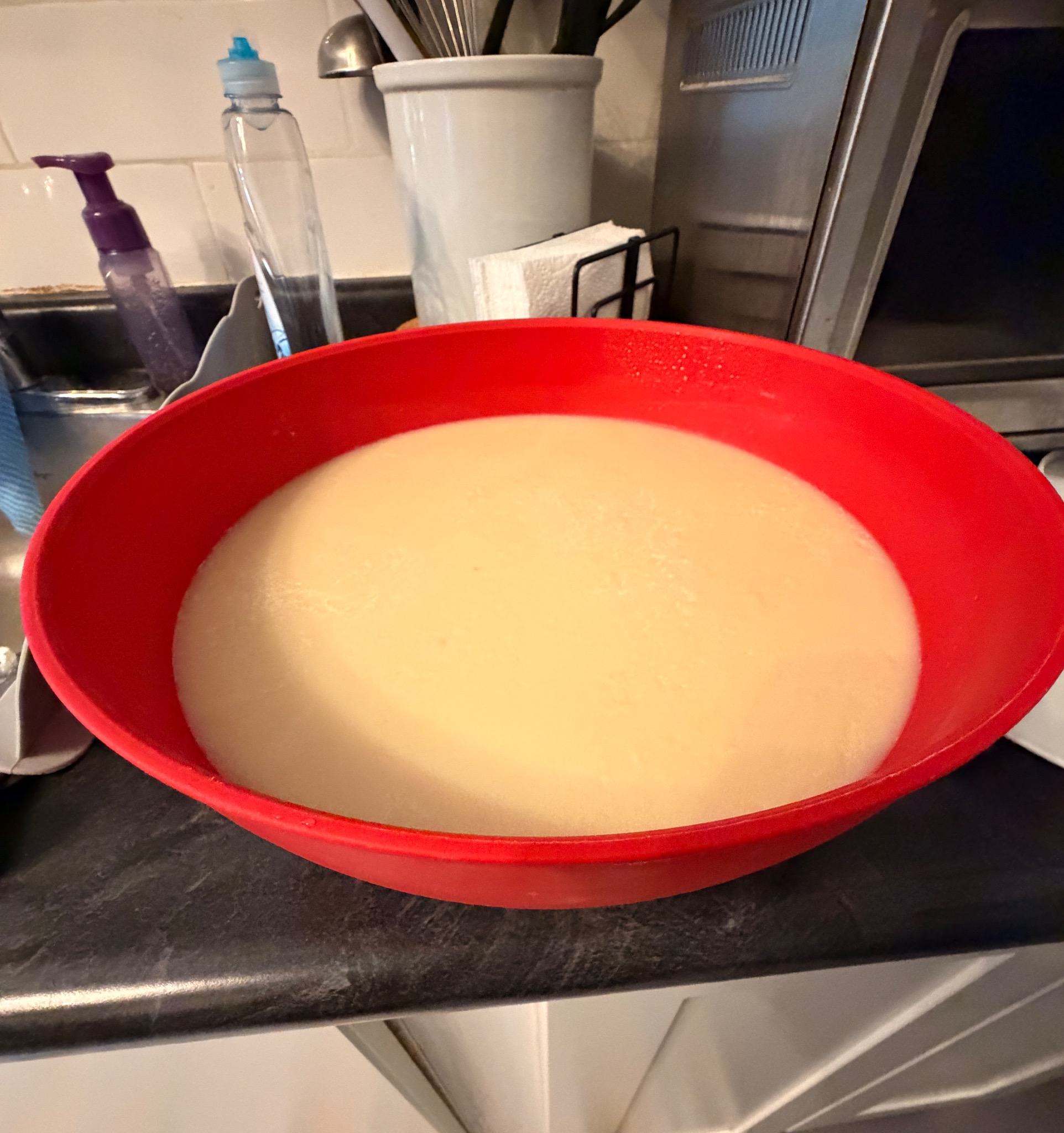
Remove the large bones and strain the hot broth. Divide it into clean, shallow containers so it can cool more quickly.
- 05
Chill promptly
Once the broth stops steaming, refrigerate it uncovered or loosely covered. Keep the total time at room temperature under 2 hours.
- 06
Skim the next day
After the broth has chilled overnight, lift off the layer of hardened fat. A batch made with collagen-rich bones may set into a soft gel when cold.
- 07
Jar and freeze
Transfer the cold broth into freezer-safe, straight-sided mason jars. Leave 1 inch (2.5 cm) of headspace, keep the broth below any shoulder and freeze the jars upright. Thaw in the refrigerator.
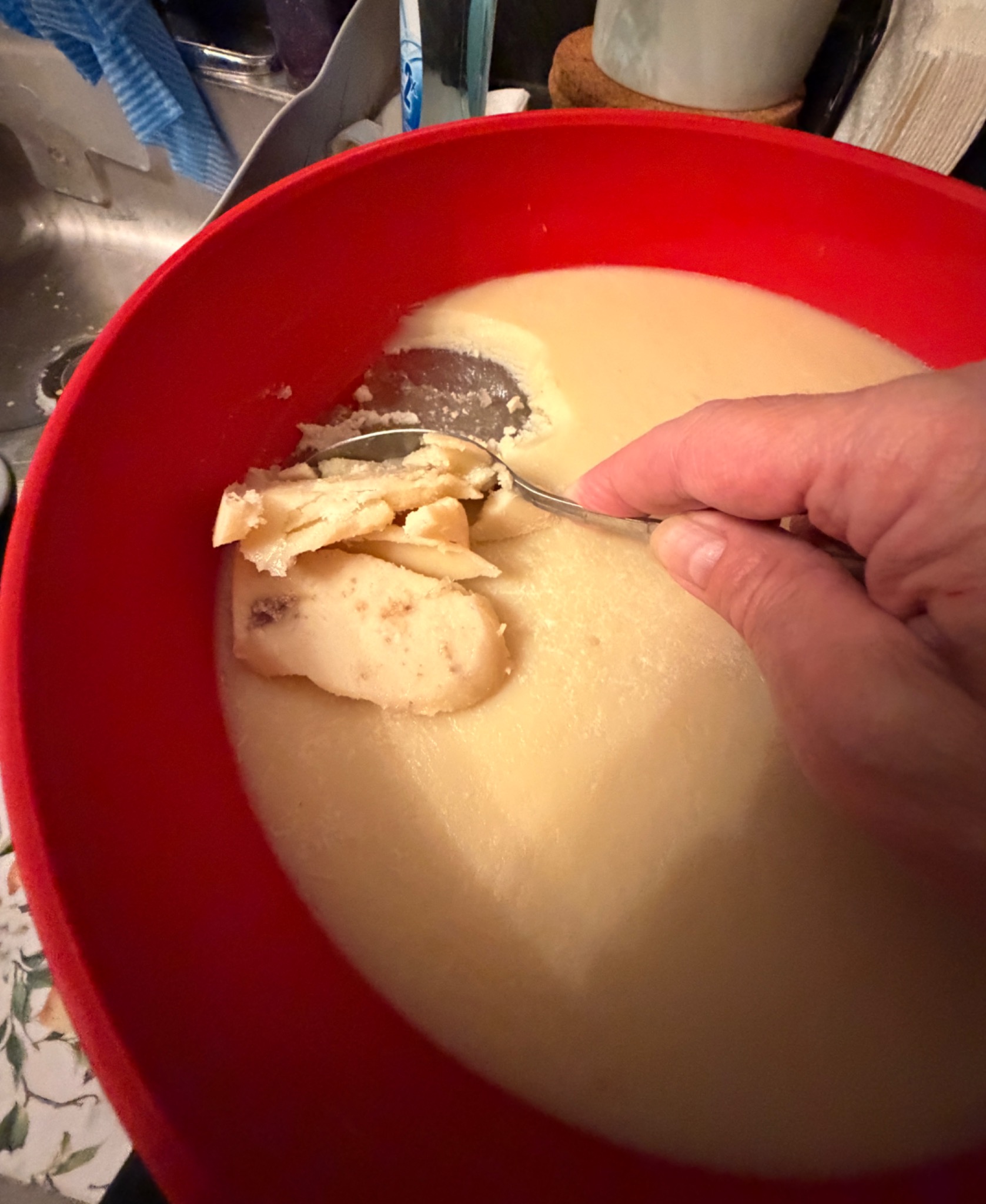
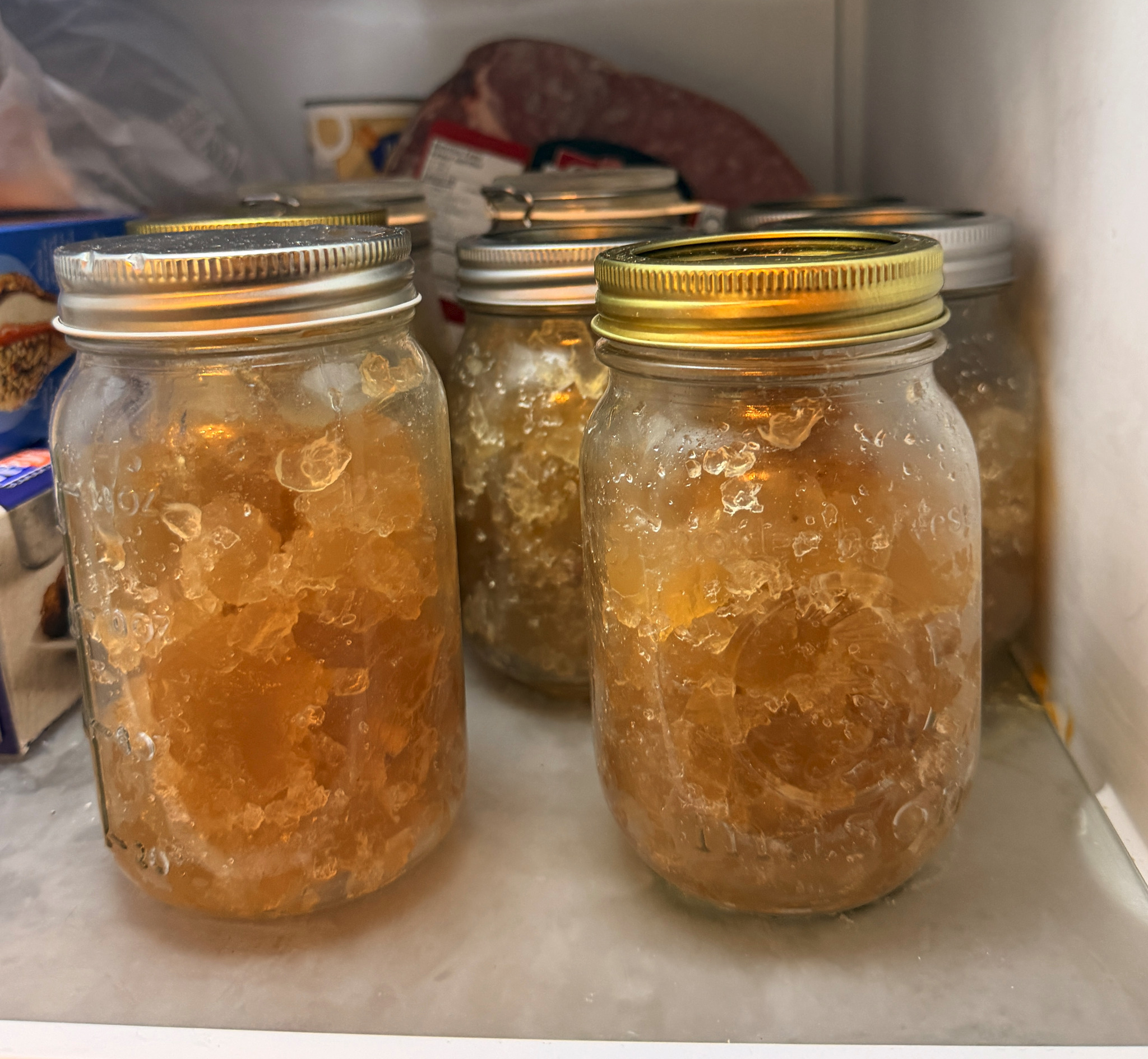
Refrigerate the strained broth promptly in shallow containers. Use refrigerated broth within 3–4 days, or freeze it for up to 4–6 months for best quality.
Health Canada storage guidance ↗Do not put hot broth straight into a glass jar and then into the freezer. Use jars specifically marked freezer-safe and preferably straight-sided; leave expansion space so the glass is less likely to crack.
Bernardin mason-jar freezing guidance ↗USEFUL DETAILS
What to expect & how I use it
Nutrition varies by batch
No made-up numbers here
Calories, protein, fat and sodium can change substantially with the bones, water, cooking yield and how thoroughly the fat is skimmed. A chilled gel shows that gelatin is present, but it does not tell you an exact collagen or protein amount.
How I use it
- Warm it gently and drink it as a simple savoury broth.
- Use it as the liquid for beef, roast or ground-meat recipes.
- Add a jar to pan juices or braised meat for extra body.
- Season after reheating so each use can be adjusted separately.
Storage routine
- Date every container or jar before storing it.
- Keep only what you will use within 3–4 days in the refrigerator.
- Freeze the rest in practical portions rather than one large jar.
- Thaw frozen broth in the refrigerator and bring it to a full rolling boil when reheating.