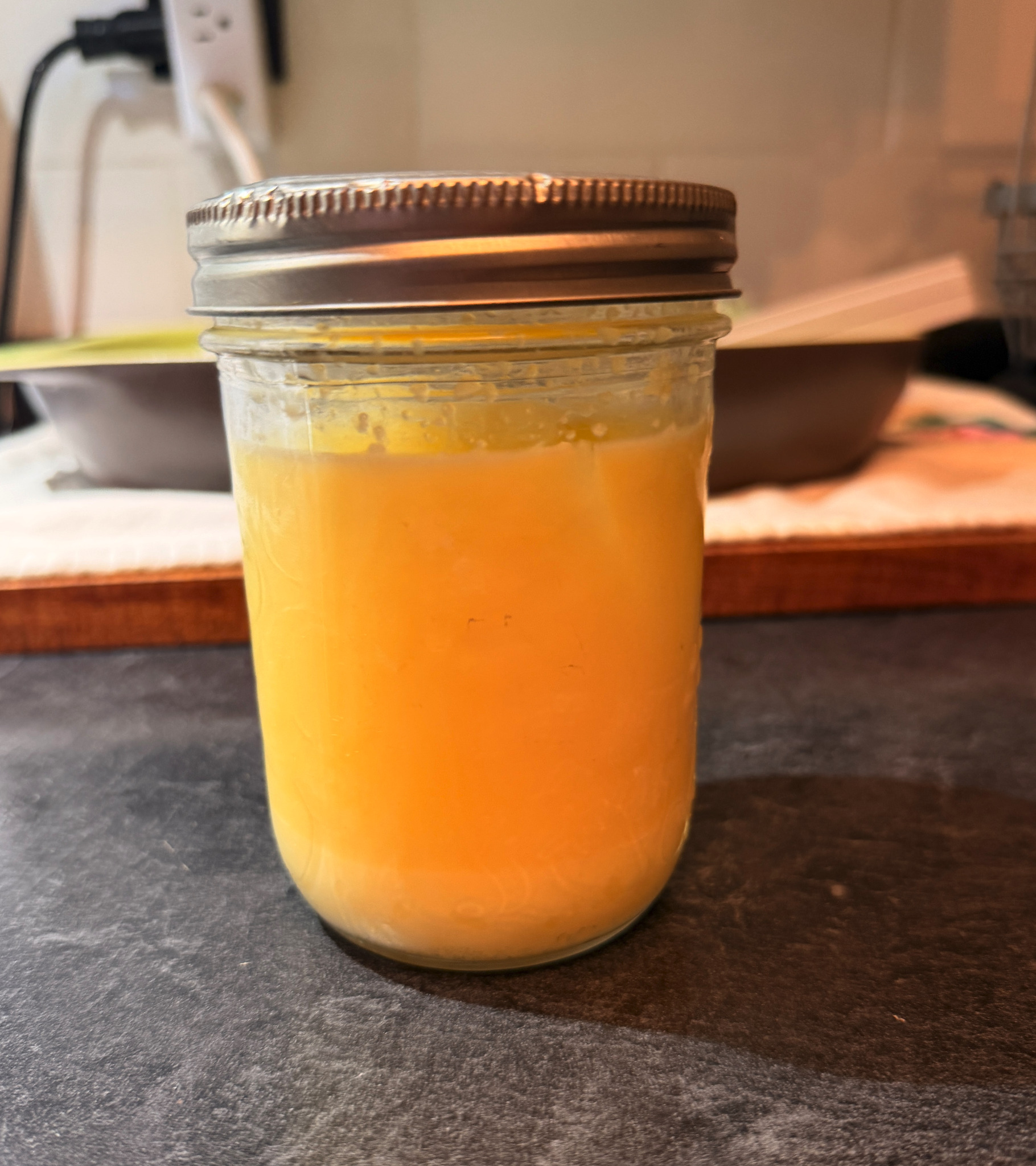
My simple homemade ghee.
I make ghee the standard, uncomplicated way: one pound of unsalted butter, low heat and patience. I love its nutty flavour, and because the milk solids have been removed, it handles higher-heat cooking better than regular butter without burning as easily.
METHOD
- 01
Melt gently
Place the unsalted butter in a clean, dry, heavy-bottomed saucepan. Melt it over low heat. Once melted, keep the heat low enough for gentle bubbling—there should be no hard boil.
- 02
Let the moisture cook away
Cook uncovered for about 25–35 minutes. Foam will form on top, and milk solids will also settle toward the bottom. There is no need to stir; let the butter cook slowly and watch it closely near the end.
- 03
Look for the golden stage
The ghee is ready when the bubbling becomes much quieter, the butterfat looks clear and golden, and the solids on the bottom are lightly browned and smell nutty. Remove it from the heat before those solids become dark or smell burnt.
- 04
Strain carefully
Let it settle for a few minutes. Line a fine-mesh strainer with cheesecloth and carefully pour the hot ghee into a clean, heat-safe, completely dry mason jar. Leave the browned solids in the pan and do not squeeze the cheesecloth.
- 05
Cool and cover
Allow the ghee to cool before sealing the jar so condensation does not form inside. It will become lighter and more solid as it cools.
Hot butterfat can cause a serious burn. Keep water away from the pan, use a heat-safe jar, pour slowly and keep children and pets clear while straining.
Low heat and patience. The last few minutes matter most—golden and nutty is what I want, not dark or burnt.
USEFUL DETAILS
Nutrition, uses & storage
Estimated nutrition
Per 1 tablespoon
- Calories
- ~120
- Fat
- ~14 g
- Protein
- 0 g
- Carbohydrate
- 0 g
Values are approximate and can vary slightly by butter brand and serving size.
How I use it
- Coating my chicken wings after the heavy cream.
- Cooking eggs or browning meat over moderate heat.
- Adding richness without the water found in regular butter.
- Use only clean, dry utensils when taking ghee from the jar.
Storage
- Keep the sealed jar away from heat, sunlight and moisture.
- For the most conservative home-storage choice, refrigerate it after cooling.
- Discard it if it develops an unusual odour, flavour, colour or any sign of mould.
- Always use a completely dry spoon so water is not introduced into the jar.