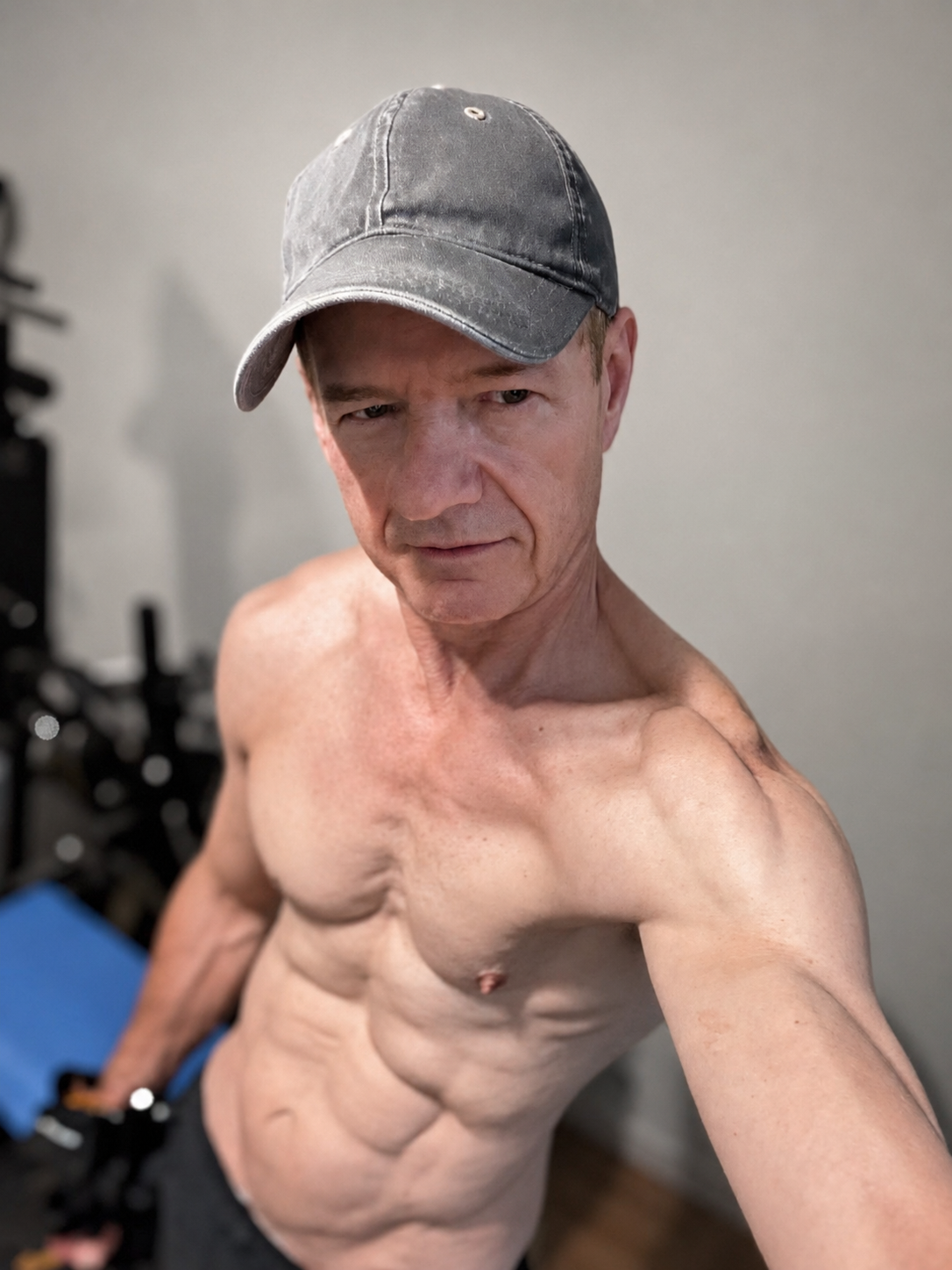
When I began lifting weights, my glutes were one of the most difficult muscle groups for me to feel working and one of the slowest to develop. It would have been easy to decide that they simply would not respond at my age. Instead, I treated them as a problem I could keep learning how to solve.
More than appearance
I did want to improve their shape and strength, but glute training is about more than appearance. Strong glutes help support the hips, contribute to balance and provide power when we stand, climb stairs, walk and carry things. Those abilities matter more—not less—as we get older.
Why hip thrusts became my main exercise
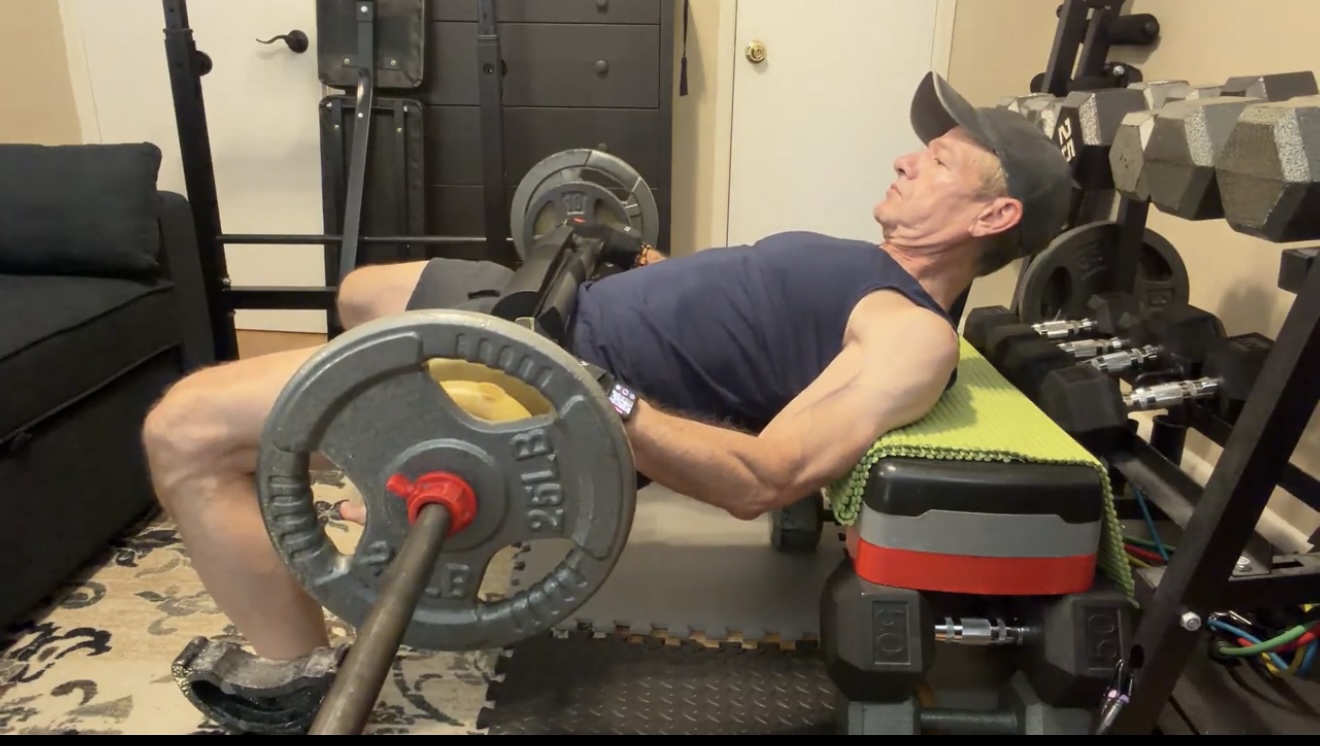
Heavy squats are effective for many people, but I did not want to rely on them as my main route to progressive overload. For me, barbell hip thrusts offered a more focused way to challenge the glutes while using a controlled range of motion and a setup I could manage at home.
I could add resistance gradually, pay attention to the contraction at the top and progress without feeling that I had to chase a risky weight. That made hip thrusts the foundation of my glute work—not because they are the only good choice, but because they were a good fit for me.
Experimenting with different exercises
I also experimented with Bulgarian split squats, weighted step-ups, goblet squats and banded kickbacks. Each movement challenged the glutes differently. Some helped with balance and single-leg strength; others made it easier to feel the muscle working.
The lesson was not to collect as many exercises as possible. It was to keep the movements I could perform with control, recover from and improve over time.
Learning to use the glutes
At first, other muscles seemed ready to take over. I had to slow down, reduce the weight when necessary and concentrate on the movement instead of merely completing the repetition. A controlled lowering phase, stable feet and a brief squeeze at the top of a hip thrust helped me connect with the muscle I was trying to train.
Increasing frequency carefully
Because my glutes were stubborn, I gradually trained them more often. That did not mean doing a punishing session every day. I used different levels of effort and allowed time to recover. More frequency only helped when the work remained controlled and my joints and muscles felt ready for it.
What I consider essential
- Choose exercises you can perform steadily and safely.
- Start with a resistance that lets you control every repetition.
- Increase weight, repetitions or control gradually—not all at once.
- Give slow-to-respond muscles enough practice, but also enough recovery.
- Stop if you feel sharp pain, and get qualified guidance if you are unsure about your form or setup.
Persistence made the difference
The most important part of my progress was not a barbell, band or particular exercise. It was refusing to give up on an area that seemed slow to change. I noticed small improvements first: better control, a stronger contraction and a little more stability. Those small changes gave me a reason to continue.
We do not have to assume that a difficult goal is impossible because progress is slow or because we are older. We can adjust, learn and keep moving forward. The result may not arrive on our preferred schedule, but persistence gives it the chance to arrive at all.
READY FOR A PRACTICAL PLACE TO BEGIN?
Use the plan as a starting point—not a finish line.
See the workouts →A note from John: This is my personal experience, not medical advice or individualized training instruction. Exercise choice depends on your health, mobility, experience and equipment. Consider speaking with a qualified healthcare or fitness professional before starting or changing a program.