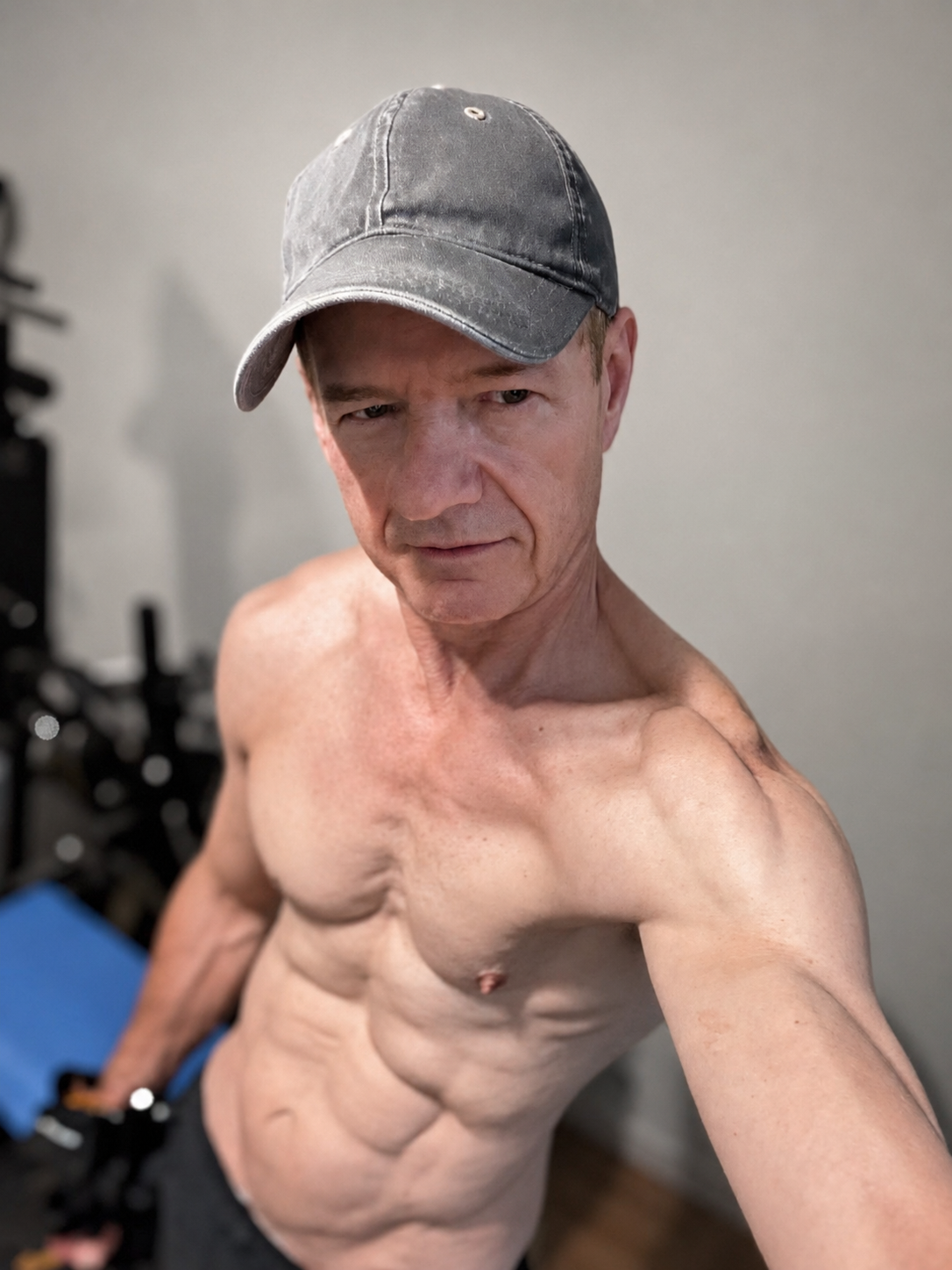
When I began training, I didn’t have a home gym waiting for me. I had a full house, a small bedroom and barely enough open floor to lie down. It would have been easy to decide that I needed more room, more equipment or more time. Instead, I worked with what I had.
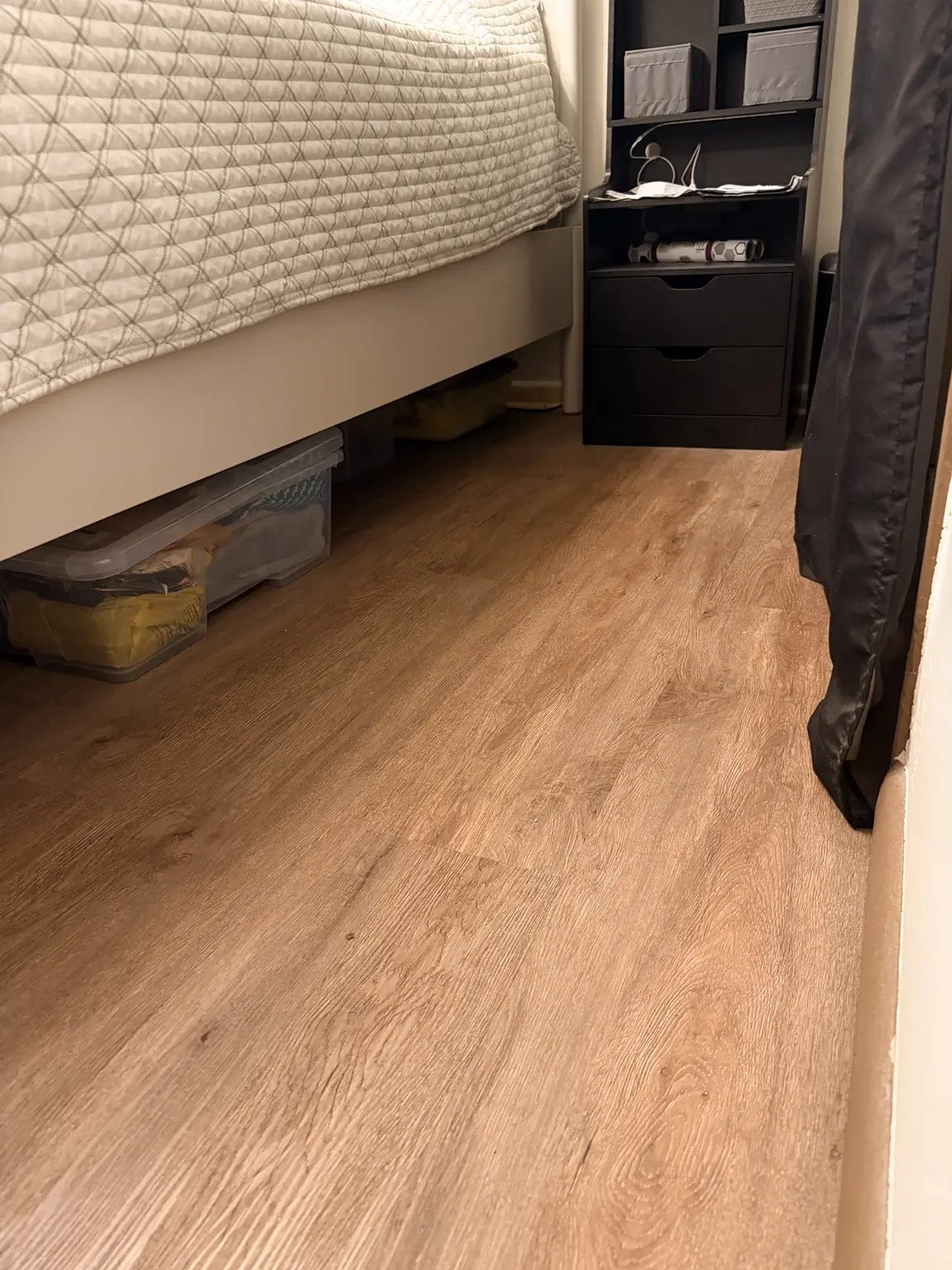
My first gym was a narrow strip of floor
The bed was directly in front of me and the closet was behind me. The clear area between them measured roughly six feet by three and a half feet. To lie flat, I opened the closet door and positioned myself partly into the doorway so there was enough length.
It wasn’t impressive, but it was available. That mattered more. The space did not determine whether I could train—it simply determined how I trained.
I improvised—but safety comes first
At the time, I even used automotive jack stands as improvised supports so I could bench press. That is part of my honest story, but it is not something I recommend copying. Today, I would tell anyone to use stable, purpose-built equipment rated for the exercise—or choose safer alternatives such as dumbbell presses, resistance-band presses or floor presses.
The lesson isn’t to take unnecessary risks. The lesson is to stop assuming that fitness only happens inside a fully equipped commercial gym. A few suitable weights, resistance bands or body-weight movements can go a long way when they are used consistently and safely.
Twenty focused minutes still count
Time can become the next excuse. People think that if they can’t complete a full hour, the workout isn’t worthwhile. I don’t agree. If I have only 20 minutes or half an hour, I still train.
In fact, I sometimes feel more focused when time is limited. I know what I need to accomplish, I avoid wasting time and I move through the session with purpose. A shorter workout can’t include everything, but it can include something—and something repeated consistently becomes progress.
WHEN TIME IS SHORT
Make the minutes count.
Choose
Pick two or three movements before the session begins.
Focus
Put distractions aside and use controlled, purposeful repetitions.
Finish
Do what fits safely today, then return for the next session.
Start where your life is now
You may not have a spare room. You may not have money for a gym membership. You may be balancing work, family and responsibilities that leave only small openings in the day. None of that means you have failed before starting.
Find the safe space you do have. Use the equipment you can reasonably afford—or begin with walking, stretching and body-weight movement. Take the 20 minutes that are available instead of waiting for an hour that may never appear.
The perfect setup is not what changes you. Returning to an imperfect setup, over and over again, is what changes you.
Do not let the workout you cannot do prevent the workout you can do.
NEW OR RETURNING TO WEIGHTS?